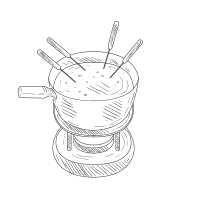
The Art of Italian Fontina Fondue with Truffle Oil: Your Blueprint for Effortless Elegance
You envision a centerpiece: a pot of fondue, creamy and inviting, its aroma promising deep, nutty cheese and the earthy whisper of truffle. The reality is often a gamble—a sauce that seizes into a rubbery mass, separates into a greasy pool, or simply tastes bland. This disappointment stems from treating fondue as mere melted cheese. In truth, it is a delicate, emulsified sauce, a culinary system demanding precision. Mastering the Italian Fontina Fondue with Truffle Oil is your key to transforming simple ingredients into an indisputable icon of comfort and sophistication, a guaranteed catalyst for memorable gatherings.
Foundational Choices: Selecting Your “Hardware”
Superior fondue begins long before the pot heats. Your initial selections form the non-negotiable foundation for flavor and texture. Compromise here, and no technique can fully compensate.
Part A: The Cheese Selection & Balance
The star must be authentic Italian Fontina Val d’Aosta. Its flavor profile—distinctly buttery, nutty, with a subtle fruity tang—is irreplaceable. Generic “Fontina” lacks this depth. For optimal melt and structure, blend it. A touch of young Gruyère adds backbone without overpowering, while a small amount of finely grated Parmigiano-Reggiano introduces a powerful umami kick. A reliable ratio is 70% Fontina, 20% Gruyère, and 10% Parmigiano-Reggiano by weight.
Part B: The Liquid Base & Aromatics
Your liquid is the solvent and flavor agent. A dry, crisp white wine like Pinot Grigio is classic; its acidity helps stabilize the emulsion. For a richer note, a lager-style beer works beautifully. For a non-alcoholic version, use a light vegetable broth with a teaspoon of lemon juice. For aromatics, rub your pot with a halved garlic clove—it imparts a hint of flavor without the harsh bite of minced garlic. A tablespoon of kirsch (cherry brandy) or fresh lemon juice added later is your secret weapon for brightness and emulsion security.
Part C: The Equipment Table
The right tools are not optional; they are control mechanisms. This comparison clarifies your best choices.
| Component Category | Options | Key Characteristics |
|---|---|---|
| Fondue Pot (Caquelon) | Enameled Cast Iron; Ceramic (Clay); Stainless Steel |
|
| Starch Thickener | Cornstarch; All-Purpose Flour; Potato Starch |
|
| Essential Utensils | Heavy Saucepan; Wooden Spoon; Flame Diffuser |
|
The Core System: The Science of the Emulsion
Fondue is not melted cheese; it is a hot fat-in-water emulsion, meticulously managed. Control these three variables to guarantee a silken, stable result.
Control Variable 1: Temperature Management
Apply the “low and slow” imperative. High heat causes cheese proteins to coagulate violently, squeezing out fat and creating a grainy, broken sauce. Begin by warming your wine or broth over medium-low heat until steaming but not boiling. When adding cheese, ensure the liquid is below a simmer. Maintain this gentle heat throughout.
Control Variable 2: The Thickening Protocol
Never sprinkle dry starch into the hot pot. Always use the slurry method: combine your cornstarch with a tablespoon of kirsch or cold water in a small bowl, mixing until completely smooth. Stir this slurry into your warmed base liquid before adding any cheese. This ensures even dispersion and prevents clumps, creating the velvety foundation that will hold the cheese in suspension.
Control Variable 3: The Finishing Touch – Truffle Oil
Heat destroys the delicate, aromatic compounds in truffle oil. Add it last, off the direct heat. After your fondue is perfectly smooth and transferred to the tabletop pot, drizzle in one to two teaspoons of high-quality white or black truffle oil and stir gently. This final flourish preserves its intoxicating aroma, letting it perfume each bite rather than evaporate during cooking.
Advanced Practices: Technique and Refinement
With your foundation set, refine your process. This is where consistent execution becomes artistry.
Preparation: The Mise en Place Mandate
Grate all cheese and let it sit at room temperature for 30 minutes. Toss it with the cornstarch called for in the slurry—this extra coating prevents clumping. Have your “rescue” ingredients measured and ready: extra warm liquid in a pitcher, and lemon juice or kirsch in a small dish. This preparation turns potential crises into simple adjustments.
The Stirring Technique: Constant, Figure-Eight Motion
Stirring is mechanical emulsification. Once your base is thickened with the slurry, begin adding cheese by the handful, stirring constantly with a wooden spoon in a slow, deliberate figure-eight pattern. This motion covers the entire bottom of the pot, preventing hot spots and encouraging the cheese to melt evenly into the liquid, not on top of it. Do not add the next handful until the previous one is fully incorporated.
Dipping Strategy & Accompaniments
Choose dippers for structure and contrast. Use a day-old, crusty bread like ciabatta or baguette, cut into cubes with some crust on each to prevent falling off the fork. Blanch broccoli florets or cauliflower for a fresh, crisp contrast. Include slices of cured meat like fennel salami or prosciutto. The goal is a platter that offers varying textures and flavors to complement the rich, umami-rich fondue.
Threat Management: Saving and Reviving Your Fondue
Adopt a proactive stance. Most fondue failures are preventable, and all are fixable if you understand the system.
Prevention: The Principles of Stability
Your primary defense is consistent, very low heat. Use that flame diffuser. Never let the fondue boil. Avoid introducing cold cheese or wet dippers, as a sudden temperature drop or excess moisture can shock the emulsion.
Intervention: The Rescue Protocols
Problem: Fondue is too thick or clumpy.
Solution: Immediately whisk in a splash of your reserved warm wine, broth, or even a touch of cream. Add it gradually until the desired consistency returns.
Problem: Fondue is breaking (oily and separated).
Solution: Remove the pot from heat. Vigorously whisk in a teaspoon of lemon juice or a fresh, small cornstarch slurry. The acid or new starch can often re-bind the emulsion.
Problem: Fondue is too thin and runny.
Solution: Combine a teaspoon of cornstarch with a tablespoon of cold liquid. Bring the fondue to the barest simmer, whisk in the slurry, and cook for one minute until thickened.
The Action Plan: A Fondue Hosting Timeline
Follow this roadmap to execute a flawless fondue event without stress.
| Timeline | Primary Tasks | Focus Goal |
|---|---|---|
| The Day Before | Purchase all cheeses. Cube bread, leave uncovered overnight to stale slightly. | Ingredient readiness and optimal bread texture. |
| 2 Hours Before | Grate cheeses; let come to room temp. Toss with cornstarch. Prepare all dipping items (blanch veggies, slice meats). | Complete mise en place. No last-minute grating. |
| 30 Minutes Before | Arrange dipping platter. Measure wine, prepare starch slurry and “rescue” ingredients. Set the table with fondue gear. | Final assembly and staging for a smooth cooking sequence. |
| During the Meal | Cook fondue on stove per technique. Transfer to tabletop pot with diffuser. Drizzle with truffle oil. Monitor heat, stir occasionally. | Maintaining the perfect consistency and temperature for the duration. |
The journey from selecting a wedge of true Fontina Val d’Aosta to the final, aromatic drizzle of truffle oil is a lesson in culinary control. You are not just making a dish; you are orchestrating a stable emulsion, balancing fat, liquid, acid, and heat. This mastery delivers a profound reward: the confident presentation of a bubbling, silken pot that becomes the heart of the table. It transforms a simple meal into a shared experience, creating warmth, conversation, and the unparalleled joy of a perfect bite, repeatedly rediscovered.
Related Articles
- Greek Saganaki-Style Flambé Fondue
- British Cheddar Fondue with Ale and Mustard
- Mediterranean Fondue with Feta and Olive Oil
- Mexican Queso Fundido vs. Swiss Fondue: A Comparison