From Simple Appetizer to Culinary Spectacle
You place a cheese plate on the table. It’s polite. It’s fine. But it doesn’t command the room. Now, imagine the alternative: the hiss of cheese hitting a blistering pan, the dramatic flare of a blue flame, and the triumphant presentation of a sizzling, aromatic masterpiece that draws everyone in. This transformation is not reserved for restaurant kitchens. It is achieved by mastering the technique of Greek Saganaki-Style Flambé Fondue.
This method moves far beyond a recipe. It is a precise culinary operation where heat management and fearless execution unlock incredible flavor. Understanding the core principles of cheese science, pan thermodynamics, and controlled combustion is your key to consistently creating a show-stopping, authentic experience that turns eating into an event.
Foundational Choices: The Cheese and Vessel
Your initial selections form the bedrock of this dish. The right cheese and pan determine its structural integrity, final texture, and theatrical potential. Compromise here, and you compromise the entire spectacle.
Part A: Cheese Selection and Preparation
The guiding principle is simple: choose a cheese that confidently holds its shape under intense heat while melting into a luscious, creamy interior. Soft, young cheeses will dissolve into a greasy puddle. You need a warrior of a cheese.
Kasseri is the authentic choice—a semi-hard sheep’s milk cheese with a perfect balance of salinity and melt. Halloumi is famously resilient, offering a satisfying squeak. Kefalograviera provides a sharper, robust flavor. For a more accessible option, a firm, low-moisture mozzarella block works surprisingly well.
Preparation is non-negotiable. Slice into ½-inch thick slabs. Pat them completely dry with paper towels. A light dredge in all-purpose flour creates a superior golden crust by absorbing surface moisture and promoting Maillard browning.
Part B: The Critical Cooking Vessel
This is not a job for a non-stick skillet or a ceramic dish. You require a small, heavy-gauge metal pan. A traditional two-handled saganaki pan is ideal, but a 6-8 inch cast iron or stainless steel skillet is perfect.
The material matters for thermal mass. It must get screaming hot and stay hot when the cold cheese hits it, ensuring a proper sear. This heavy vessel is also your safety tool, containing the flambé flame securely.
Part C: Flambé Fuel & Flavor Agents
These components dictate the flavor profile and the reliability of your flame. Choose with purpose.
| Component | Options | Key Characteristics |
|---|---|---|
| High-Proof Spirit | Ouzo, Metaxa, Brandy, 80-proof+ Vodka | Ouzo is authentic, imparting a distinctive anise flavor. Metaxa (a Greek spirit brandy) adds aromatic warmth. Brandy offers rich, caramel notes. Vodka is a neutral, reliable choice. All must be at least 80-proof (40% ABV) to ignite properly. |
| Aromatic Fat | Extra Virgin Olive Oil, Butter, or a combination | Olive oil provides authentic Greek flavor and a high smoke point for the sear. Butter contributes richness and color but can burn more easily. I often use a mix: oil for heat stability, with a small pat of butter for flavor. |
The Core System: Heat Management and Flambé Control
This dish is a rapid-fire sequence of precise thermal stages. Mastery lies in commanding the transition from sear to flame to finish.
Variable 1: The Sear – Creating the Foundation
Target: A rippling-hot pan (over medium-high to high heat) that creates a deep golden-brown crust in 60-90 seconds per side, without fully melting the cheese core.
Consequence of Error: A pan that’s too cool yields a pale, greasy, and limp cheese. One that’s overcrowded steams instead of sears. You lose the essential textural contrast.
Control: Heat your dry pan for 2-3 minutes until a drop of water sizzles and vanishes instantly. Add your fat, let it shimmer, then add the cheese. Do not move it. Let the crust form. Peek at the edges for color, then flip decisively.
Variable 2: The Flambé – The Controlled Burn
Target: A quick, dramatic flame that burns for 10-20 seconds, combusting the alcohol, caramelizing any sugars, and leaving behind concentrated flavor.
Consequence of Error: Adding spirit to an active heat source can cause a dangerous flare-up. Using low-proof liquor results in a raw, boozy taste without the visual drama.
Control: This is your moment of command. Remove the pan from the heat source entirely. Pour in your pre-measured spirit (about 1-2 tablespoons) at the pan’s edge, not directly on the cheese. Carefully tip the pan toward the flame of your burner to ignite, or use a long-reach lighter. The flame will travel across the surface. Let it die out naturally—do not blow it out.
Advanced Practices: Flavor Optimization and Presentation
Now, shift from basic execution to crafting a memorable, shareable experience. This is where you imprint your personal touch.
Preparation and Flavor Layering
Infuse your cooking fat for an aromatic base. Add a smashed garlic clove and a pinch of red pepper flakes to the cool oil, then heat them together until fragrant before adding the cheese. Remove the garlic before it burns.
The finishing touch is non-negotiable: a generous squeeze of fresh lemon juice applied after the flambé. The bright acid cuts through the richness, elevating the dish from heavy to sublime.
The Fondue Transformation
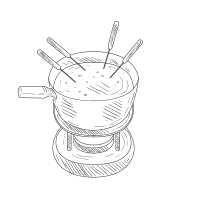
To evolve from individual *saganaki* to a communal fondue, simply scale up your vessel. Use a 10-inch skillet. Sear multiple cheese portions. After the flambé, immediately add a liquid—a splash of dry white wine, chicken broth, or even a touch of cream—and stir vigorously. The melted cheese will emulsify into a gloriously creamy, dippable sauce. Serve instantly with crusty bread, sliced apples, and pear.
Threat Management: Problem Prevention and Solution
Adopt a proactive stance. Confidence at the stove comes from knowing how to prevent and solve issues before they spoil the show.
Prevention: Safety and Texture
Tie back long hair. Roll up sleeves. Keep a metal lid or baking sheet nearby to smother any runaway flames. Ensure your cheese is thoroughly patted dry—this is the single biggest factor in achieving a proper sear instead of a steam.
Intervention: Common Issues
Problem: Cheese won’t brown; it just sweats oil.
Solution: Your pan is not hot enough. Let it preheat longer. Also, double-check that the cheese surface is bone-dry.
Problem: The spirit will not ignite.
Solution: The proof is too low, or the spirit is cold. Use a higher-proof option (80+). You can gently warm the spirit in a separate container before adding it to the pan.
Problem: Cheese turns tough and rubbery.
Solution: You’ve overcooked it. The sear must be hot and fast to create a crust while preserving a soft interior. Reduce your cook time per side.
The Action Plan: A Step-by-Step Sequence
Follow this phased roadmap. Meticulous preparation makes the high-speed cooking sequence fluid and stress-free.
| Phase | Primary Tasks | Focus On |
|---|---|---|
| Prep & Measure | Slice cheese ½-inch thick. Pat dry completely. Dredge lightly in flour. Measure 2 tbsp spirit. Cut lemon wedges. Gather tools: pan, lid, tongs, lighter. | Mise en place. Every component must be within arm’s reach. There is no time to search. |
| The Sear | Heat dry pan over medium-high for 3 min. Add fat. When shimmering, add cheese. Sear undisturbed for 60-90 sec until golden. Flip and repeat. | Developing the crust. Resist the urge to move or press the cheese. Let the Maillard reaction work. |
| The Flambé | Remove pan from heat. Pour spirit at pan’s edge. Ignite carefully with a long lighter or by tipping pan toward burner. Let flames subside completely. | Confident control. Pan is off heat. You command the flame. Let it burn out naturally. |
| The Finish & Serve | Squeeze lemon juice over cheese. (For fondue: add splash of wine/broth, stir to emulsify.) Serve immediately in the hot pan. | Immediate presentation. The sizzle and aroma are part of the experience. Serve while wildly hot. |
The Art of the Shared Moment
Mastering Greek Saganaki-Style Flambé Fondue is a lesson in culinary alchemy. It demonstrates how commanding simple physics—intense heat and rapid combustion—transforms humble ingredients into a moment of pure joy. The journey from selecting the right cheese to tipping the pan with fearless confidence is short, but the impact is profound.
This is more than a recipe. It is a guaranteed method to create conversation, laughter, and an unforgettable highlight. It turns a meal into a shared event, enriching your table with the unparalleled satisfaction of a technique mastered and a spectacle delivered. Now, light the flame.
Related Articles
- British Cheddar Fondue with Ale and Mustard
- Mediterranean Fondue with Feta and Olive Oil
- Mexican Queso Fundido vs. Swiss Fondue: A Comparison
- German Beer Cheese Fondue Variations by Region