Cheese fondue is one of the most forgiving dishes in Swiss cuisine — once you understand three things: the right cheese blend, the right heat, and the right stirring technique. Master those, and you’ll never produce a grainy, broken, or rubbery pot again.
This guide covers everything: the exact cheeses used in Switzerland, blending ratios, step-by-step technique, every regional variation, the best dippers, what to drink alongside it, and a complete troubleshooting section for when things go sideways. Whether you’re making fondue for two or a dinner party of twelve, you’ll find the answers here.
What Is Cheese Fondue?
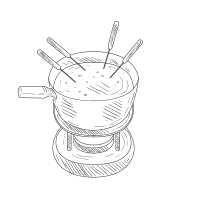
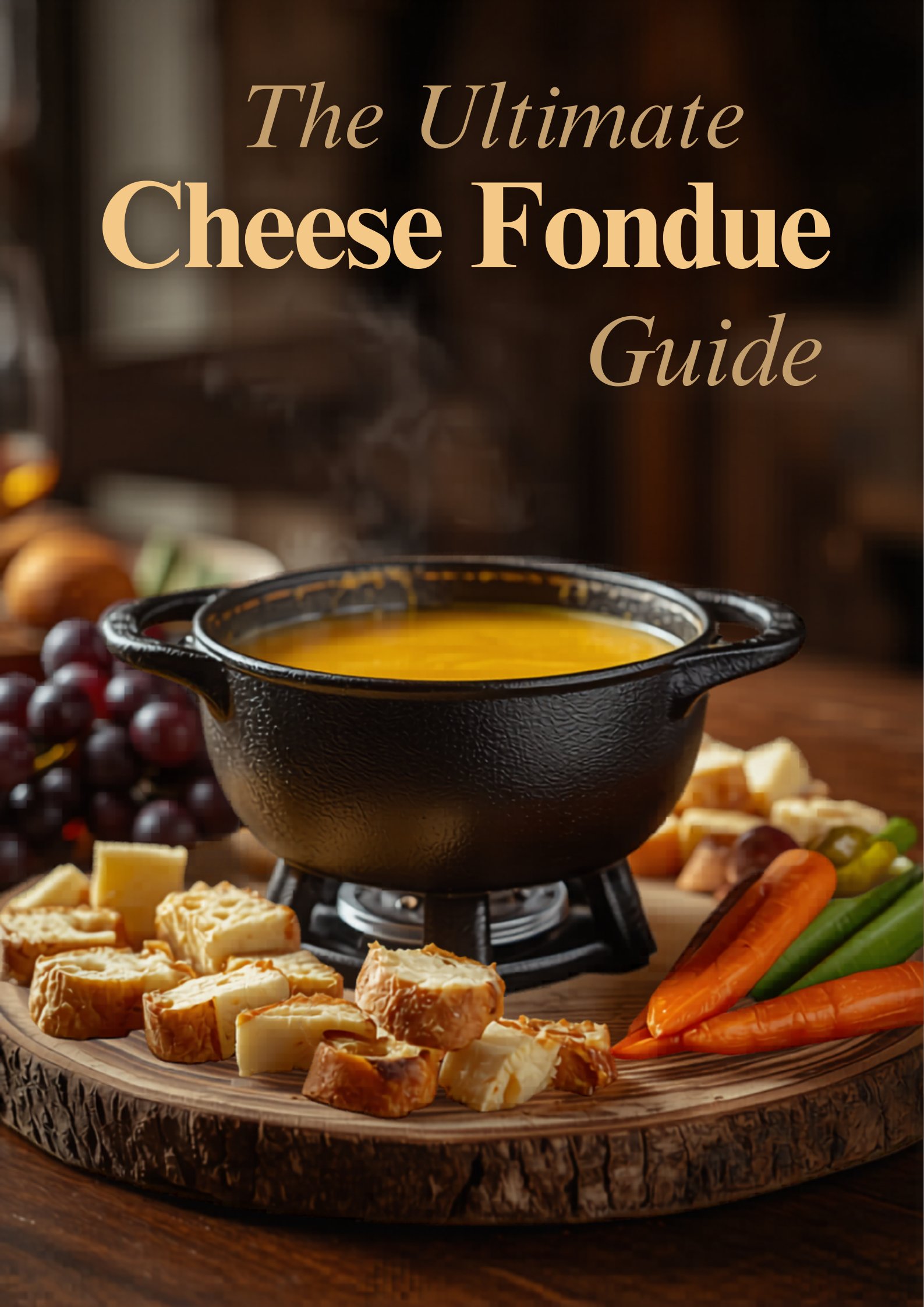
Cheese fondue — fondue au fromage in French — is a dish of melted cheese served communally in a shared pot called a caquelon. Diners spear pieces of bread (or vegetables, or meat) on long forks and swirl them through the molten cheese.
It originated in the Swiss Alps, most likely in the canton of Fribourg and the Valais region, where hard mountain cheeses were preserved through winter and melted with wine as a practical way to eat them. The Swiss Cheese Union popularized it globally in the 1960s and 70s by distributing fondue sets to Swiss embassies and restaurants worldwide.
The dish has three core components that must work together:
- Cheese — typically a blend of aged Gruyère and one or two other Swiss varieties
- Wine — a dry, acidic white wine that prevents the proteins from clumping
- Starch — cornstarch mixed into the cheese before melting, which binds the emulsion
Without the acid from the wine and the starch, even the best cheese will separate into stringy clumps floating in a pool of grease. The science matters as much as the ingredients.
The Best Cheeses for Fondue
The most common mistake people make is using a single cheese — or worse, pre-shredded cheese from a bag. Pre-shredded cheese contains anti-caking agents (potato starch, cellulose) that interfere with smooth melting. Always grate from a block.
The Core Swiss Varieties
| Cheese | Flavor Profile | Role in the Pot | Aged |
|---|---|---|---|
| Gruyère | Nutty, slightly sweet, complex | Primary flavor base; melts smoothly | 5–12 months |
| Emmentaler | Mild, buttery, faintly fruity | Creates stretch and smooth texture | 4–8 months |
| Vacherin Fribourgeois | Creamy, mild, slightly tangy | Adds creaminess; authentic Fribourg style | 3–6 months |
| Appenzeller | Sharp, herbal, pungent | Adds depth; use sparingly | 3–6 months |
| Comté (French) | Rich, caramelized, earthy | Excellent Gruyère substitute | 6–24 months |
| Raclette | Mild, creamy, slightly pungent | Very smooth melt; great in blends | 3–6 months |
Recommended Blending Ratios
The classic moitié-moitié (“half-half”) blend from Fribourg uses equal parts Gruyère and Vacherin Fribourgeois — this is the most balanced and approachable option for beginners.
- Classic Swiss (beginner-friendly): 60% Gruyère + 40% Emmentaler
- Moitié-moitié (Fribourg): 50% Gruyère + 50% Vacherin Fribourgeois
- Bold & complex: 50% Gruyère + 30% Emmentaler + 20% Appenzeller
- Ultra-creamy: 40% Gruyère + 40% Raclette + 20% Vacherin Fribourgeois
For a standard four-person fondue, use 200g (7 oz) of cheese per person — so 800g total for four. Hungry guests or a cold evening? Go to 250g per person.
→ See our full guide: Which Cheese to Use for Fondue and Best Cheese Combinations for Fondue
Equipment You Need
The Caquelon (Fondue Pot)
For cheese fondue specifically, ceramic or cast iron is the right choice. Both materials distribute heat gently and evenly, preventing the hot spots that cause burning and separation. Stainless steel gets too hot too fast and is better suited for oil/broth fondue.
- Ceramic caquelon: Traditional choice. Heats slowly, holds temperature well, easy to clean. The rough interior surface helps maintain the emulsion. Best for cheese.
- Cast iron: More durable, retains heat longer. Slightly harder to clean. Excellent for both cheese and meat fondue.
- Electric pot: Consistent temperature control — useful for beginners, but the fondue can get too hot if you’re not careful.
Capacity: a 2-quart (1.9L) caquelon serves 4 people comfortably. For 6–8 people, use a 3-quart pot.
Fuel Options
- Fondue fuel (Sterno / gel fuel): Most common in the US. Controllable flame, burns cleanly. Use the low or medium setting for cheese.
- Alcohol burner: Traditional Swiss option. Easy to refuel; flame is adjustable but less precise than gel fuel.
- Electric: Best temperature consistency. Set to 350°F (175°C) for cheese fondue.
- Tealight candles: Not powerful enough for cheese — suitable only for keeping chocolate fondue warm.
Fondue Forks
Traditional cheese fondue forks are long (10–12 inches) with two thin tines. The key: each person at the table should have a different colored fork handle so nobody loses track of theirs in the pot. Don’t double-dip with the fork you eat from — use the fondue fork to transfer to your plate.
→ Compare pot options: Best Cheese Fondue Pots for Home Use
The Classic Swiss Cheese Fondue Recipe
This is the foundational recipe. Every variation builds from it.
Ingredients (serves 4)
- 400g (14 oz) Gruyère, coarsely grated
- 400g (14 oz) Emmentaler, coarsely grated
- 1 clove garlic, halved
- 300ml (1¼ cups) dry white wine (Swiss Fendant, Chasselas, or Pinot Gris — Sauvignon Blanc works well too)
- 1 tablespoon lemon juice
- 2 tablespoons cornstarch
- 3 tablespoons kirsch (cherry brandy) — optional but traditional
- Pinch of freshly grated nutmeg
- White pepper to taste
Step-by-Step Method
- Prep the cheese. Grate the cheeses on the large holes of a box grater. In a bowl, toss the grated cheese with the cornstarch until evenly coated. This is non-negotiable — the cornstarch coats the cheese proteins and prevents them from clumping when they hit the heat.
- Rub the pot with garlic. Cut the garlic clove in half and vigorously rub the inside of the caquelon with the cut side. This infuses a subtle garlic flavor without making it overpowering. Discard the garlic (or leave it in the pot — personal preference).
- Heat the wine. Add the wine and lemon juice to the pot. Heat over medium on your stovetop until the wine is steaming and just beginning to bubble — not boiling. The lemon juice adds extra acidity that helps stabilize the emulsion.
- Add cheese gradually. Add the cheese-cornstarch mixture one large handful at a time. Stir constantly in a slow figure-8 or zigzag motion (not circular — circular motion can cause the cheese to clump in the center). Wait for each addition to fully melt before adding the next. This takes patience but it’s the most important step.
- Add kirsch. Once all the cheese is melted and the fondue is smooth, remove from heat briefly and stir in the kirsch. The cold alcohol helps stabilize the emulsion one final time. Season with nutmeg and white pepper.
- Transfer to the tabletop burner. Move the caquelon to its stand and light the burner on the lowest setting. You want the fondue to remain hot enough to stay liquid but not so hot it scorches the bottom. You’ll know the heat is right when you see occasional gentle bubbles breaking the surface.
Temperature Guide
- Ideal serving temperature: 140–150°F (60–65°C)
- Too cold: Fondue stiffens and becomes stringy
- Too hot: Proteins separate; oil pools on top
→ Use our Fondue Recipe Generator to customize quantities for any group size.
Regional Cheese Fondue Variations
Moitié-Moitié (Fribourg, Switzerland)
The most celebrated regional style. Equal parts Gruyère and Vacherin Fribourgeois, using white wine from Fribourg. Creamier and milder than the classic Gruyère-Emmentaler blend. If you can find Vacherin Fribourgeois at a specialty cheese shop, this is worth trying.
Fribourg Style (Pure Vacherin)
Uses 100% Vacherin Fribourgeois, often with water instead of wine. Produces an exceptionally creamy, mild fondue. Traditional Fribourg families often make it this way for special occasions.
Fondue Savoyarde (French Alps)
Uses Beaufort, Comté, and/or Abondance cheese. Made with a dry white Savoie wine such as Apremont or Chignin. More aromatic and complex than the Swiss version, with a slightly longer melt time due to the density of Beaufort.
German Beer Cheese Fondue
Substitutes white wine with a malty German lager or Weissbier. Uses Emmentaler and Gruyère with a tablespoon of Dijon mustard. Richer and slightly bitter — excellent with pretzels as dippers.
→ See: How to Make Beer Cheese Fondue
No-Wine Version
Replace wine with apple juice or non-alcoholic white grape juice. Add an extra teaspoon of lemon juice to compensate for the missing acid. The result is slightly sweeter but still smooth.
→ See: Cheese Fondue Without Wine
Best Dippers for Cheese Fondue
Bread (The Essential)
Day-old bread is better than fresh. Fresh bread is too soft and will fall off the fork; day-old bread has a firmer crumb that holds up when swirled through the cheese. Cut into 1-inch cubes, making sure each piece has some crust — the crust anchors the bread on the fork.
- Best choices: Swiss sourdough (Ruchbrot), French baguette, crusty Italian bread, pumpernickel, seeded rye
- Avoid: Wonder-style sandwich bread, anything with a very soft crumb
→ Full breakdown: Best Bread Types for Cheese Fondue
Vegetables
- Blanched broccoli and cauliflower florets (30 seconds in boiling water, then ice bath)
- Cherry tomatoes
- Cornichons (the classic Swiss accompaniment — their acidity cuts through the richness)
- Blanched asparagus spears
- Roasted fingerling potatoes (incredibly good with fondue)
- Sliced radishes
Proteins & Other Dippers
- Cured meats: salami, prosciutto (roll into cylinders and skewer)
- Cooked shrimp
- Apple slices (the sweet-tart contrast works beautifully with aged Gruyère)
- Sliced pears
- Pretzel bites
- Roasted mushrooms
→ See our Cheese Fondue Dipping Tips for technique.
→ Or use our interactive Cheese Pairing Guide to build the perfect spread.
Wine & Drink Pairing
The Swiss say you should drink the same wine you cook with. There’s practical wisdom in that — dry white wines with good acidity are the right match for the fat and richness of melted cheese.
Best Wines
- Swiss Fendant (Chasselas): The traditional choice. Light, crisp, mineral. Ideal if you can find it.
- Sauvignon Blanc: Excellent alternative. High acidity, herbaceous notes that complement aged cheese.
- Pinot Gris (Alsace style): Richer body, still dry enough. Works well with the creamier blends.
- Dry Riesling: Great with Gruyère-Emmentaler blends.
- Avoid: Oaky Chardonnay (the oak clashes with cheese), anything sweet, anything red (tannins curdle with the fat)
Non-Wine Options
- Black tea: The traditional Swiss alternative. The tannins in tea behave differently from wine tannins and are thought to aid digestion.
- Non-alcoholic dry sparkling grape juice
- Apple cider (dry, not sweet)
The Kirsch Tradition
Between bites, Swiss fondue tradition calls for a small shot of kirsch (cherry brandy). This is believed to aid digestion and prevent the cheese from solidifying in your stomach. Whether or not that’s true, kirsch is a lovely palate cleanser between courses of rich, melted cheese.
→ Deep dive: Perfect Wine Pairing for Cheese Fondue
Troubleshooting Cheese Fondue
Even experienced cooks hit problems. Here’s how to fix every common issue.
Problem: Grainy or Lumpy Texture
Why it happens: Heat was too high, or cheese was added too quickly, causing the proteins to seize before they emulsified with the wine.
Fix: Stir in a tablespoon of warm white wine and reduce the heat immediately. Stir in slow, steady figure-8 motions. If the lumps are severe, add one more teaspoon of lemon juice and continue stirring — the acid often rescues it.
→ Full guide: How to Fix Grainy Cheese Fondue
Problem: Fondue is Too Thick
Why it happens: Too much cheese relative to the wine, or the fondue has cooled and tightened up.
Fix: Warm a small amount of wine in a separate pan and whisk it into the fondue a tablespoon at a time. Don’t add cold wine directly — thermal shock can break the emulsion.
→ See: How to Thicken (and Thin) Cheese Fondue
Problem: Fondue is Oily or Separated
Why it happens: The emulsion has broken — usually from overheating. The cheese proteins separate from the fats.
Fix: Remove from heat immediately. Vigorously stir in one tablespoon of cold lemon juice or a splash of cold white wine. The thermal shock and extra acid can sometimes bring the emulsion back together. If it doesn’t work, blend in a teaspoon of cornstarch mixed with a tablespoon of cold wine and reheat very gently while stirring.
Problem: Burning on the Bottom
Why it happens: Heat too high on the tabletop burner, or fondue left without stirring.
Fix: Lower the flame immediately. The crusty bottom layer — called the religieuse (“nun”) in Switzerland — is actually considered a delicacy. Once the fondue is gone, the caramelized crust at the bottom is scraped out and eaten. If it’s actually burnt (black, not golden), scrape it out and discard before it contaminates the rest of the pot.
→ Full troubleshooting: Cheese Fondue Troubleshooting Guide
Problem: Fondue Won’t Stay Warm at the Table
Fix: Increase the fuel flame slightly, or switch to a higher-output fuel. Make sure the caquelon is sitting on a proper fondue stand, not a flat surface (airflow under the pot matters). Pre-warming the caquelon with hot water before adding the fondue helps retain temperature longer.
→ See: Tips for Keeping Cheese Fondue Warm
Pro Tips for Perfect Fondue Every Time
- Grate, don’t slice. Grated cheese has far more surface area for the wine to contact, which means it melts faster and more evenly. Sliced cheese creates a “melt wall” that traps steam and creates lumps.
- Room temperature cheese. Take your cheese out of the fridge 30 minutes before cooking. Cold cheese needs higher heat to melt — heat that can separate the fondue before the emulsion forms.
- The cornstarch must coat the cheese. Toss it thoroughly before adding anything else. The starch is your insurance policy against separation.
- Never let it boil. A vigorous boil breaks the emulsion. Look for gentle bubbles at the edges — that’s ideal.
- Stir in a figure-8, not a circle. A circular motion creates a vortex that pulls unmelted cheese to the center in a lump. Figure-8 motion keeps everything moving evenly.
- Cornstarch vs. flour: Cornstarch gives a cleaner, more glossy result. Flour makes the fondue slightly heavier. Either works — use what you have.
- The “la croûte” moment: After everyone has eaten, leave a little fondue in the pot and let it form a golden crust on the bottom. Peel it out — it’s one of the best bites of the night.
→ More techniques: Cheese Fondue Texture Tips and Flavor Tips & Tricks
Frequently Asked Questions
How much cheese do I need per person?
Plan on 200g (7 oz) of cheese per person as a main course, or 150g (5 oz) if serving as a starter. For hearty appetites or a cold winter evening, 250g per person is not unreasonable.
→ Our cheese calculator covers exact quantities.
Can I make cheese fondue without wine?
Yes. Replace the wine with dry apple juice or non-alcoholic white grape juice and add an extra teaspoon of lemon juice. The acid is what you need — wine just happens to be the best-tasting source of it. See our no-wine fondue guide for more.
Can I make fondue ahead of time?
You can prep the cheese and wine separately up to 24 hours ahead. The tossed cheese-cornstarch mixture keeps refrigerated in a zip-lock bag. Don’t melt the fondue and try to reheat it — the emulsion will break. Melt fresh, starting with the pre-grated blend.
What do I do with leftover fondue?
Refrigerated fondue solidifies into a firm cheese paste. The next day, use it as a grilled cheese filling, stir it into scrambled eggs, or thin it with a little wine in a pan for a pasta sauce.
→ See: Creative Recipes for Leftover Fondue
Is there a way to make cheese fondue without a fondue pot?
Yes — a small, heavy-bottomed saucepan on the lowest stovetop setting works. Transfer to a slow cooker on the “warm” setting to keep it hot at the table. See our full guide: Fondue Without a Fondue Pot.
Why does my fondue keep getting stringy?
Stringiness usually means the heat is too low and the cheese isn’t fully emulsifying — or you’re using a cheese with too low a fat content. Increase the heat slightly and add a splash of wine while stirring. Using Emmentaler (which melts very smoothly) in the blend also helps.
Find Your Perfect Fondue Recipe
Tell us your dietary needs, group size, and flavor preferences — our tool builds you a custom cheese fondue recipe in seconds.
Related Guides
- Which Cheese to Use for Fondue
- Best Cheese Combinations for Fondue
- Different Types of Cheese Used for Fondue
- Best Cheese Fondue Pot for Home Use
- Perfect Wine Pairing for Cheese Fondue
- Complete Cheese Fondue Troubleshooting
- Professional Chef Secrets for Restaurant-Quality Fondue
- How to Host a Fondue Party