The Fondue Fantasy vs. Your Reality
You envision a pot of molten, velvety cheese, a centerpiece of laughter and shared bites. The reality? A grainy, separated mess or a bland, gluey pool that hardens into a rubbery mass. This disappointment isn’t fate. It’s a gap in technique. The chasm between a failed fondue and a flawless one is bridged not by expensive ingredients, but by a handful of critical, professional methods. Mastering these professional chef secrets for restaurant-quality fondue at home transforms it from a risky novelty into a foolproof pillar of elegant entertaining. This is your guide to commanding the pot.
The Foundation: Choosing Your Culinary Arsenal
Your initial choices in tools and ingredients form the unshakable base for everything that follows. Treat this not as shopping, but as assembling your control system.
The Pot and Heat Source: Your Command Center
The vessel and its heat are your primary levers of control. Choose wisely.
The Caquelon vs. The Modern Pot: The traditional Swiss ceramic caquelon isn’t just for show. Its thick, earthenware walls distribute heat gently and evenly, preventing scorching and maintaining a stable temperature—key for the delicate emulsion. A heavy-bottomed enameled cast iron or stainless steel pot is an excellent alternative, offering similar heat retention. Avoid thin, reactive metals like aluminum or plain stainless steel without a clad bottom; they create hot spots that will break your sauce.
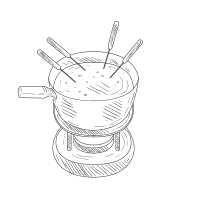
Heat Management is Non-Negotiable: A pot over a direct, high stove burner is a recipe for disaster. You must use a low, consistent, adjustable flame. A tabletop rechaud (fondue burner) fueled by ethanol gel or butane is the professional’s choice for maintaining the perfect gentle simmer at the table. This is not optional equipment; it is the heart of temperature control.
The Core Components: Cheese, Liquid, and Stabilizers
Every element has a chemical and culinary purpose. Understanding this turns cooking into chemistry.
| Component Category | Options & Characteristics |
|---|---|
| Cheese (The Star) |
Chef’s Rule: Always grate your own cheese. Pre-shredded cheese contains anti-caking agents (like cellulose) that can inhibit a smooth melt. |
| The Liquid (The Medium) |
|
| The Stabilizers (The Insurance) |
|
The Core System: Commanding the Science of the Melt
Fondue is not merely melted cheese. It is a temporary, hot emulsion—a suspension of fat in water—that you are personally responsible for maintaining. These are your control variables.
Variable 1: Precision Temperature Control
The Target: A bare, gentle simmer. You should see tiny bubbles lazily rising to the surface, never a rolling boil. If your pot is bubbling vigorously, you have lost control.
The Consequence of Failure: Excessive heat causes the proteins in the cheese to tighten and squeeze out their fat, resulting in a broken, greasy pool with tough, rubbery curds. This is the point of no return for texture.
The Method: Use your rechaud on its lowest effective setting. If adjusting the flame, do so in tiny increments. Your fondue should stay hot enough to melt a dipped piece of bread, but never so hot it cooks aggressively.
Variable 2: Acid and Moisture Balance
The Role of Acidity: Acid from wine or lemon juice keeps the cheese proteins relaxed and cooperative. Without it, the fondue becomes stringy and difficult to manage. It’s the difference between smooth silk and sticky glue.
Managing Consistency: If your fondue thickens too much as it sits, do not crank up the heat. Take the pot off the flame and stir in a splash of warm wine, broth, or even a touch of cream. If it seems too thin from the start, a slurry of a teaspoon of cornstarch mixed with a tablespoon of kirsch or wine, whisked in over low heat, will tighten it gently.
Variable 3: The Thickening Protocol
The “Shake-in-a-Jar” Chef’s Trick: To guarantee lump-free integration of your stabilizer, toss your grated cheese with the cornstarch or flour in a large bowl until evenly coated. For an even more foolproof method, add the cornstarch to your cold wine or kirsch in a lidded jar and shake vigorously until completely dissolved. This slurry integrates seamlessly.
The Stirring Technique: Once the cheese begins to melt, stir with a wooden spoon in a slow, consistent figure-eight pattern. This ensures even heat distribution and emulsification. Aggressive, fast stirring can incorporate too much air and sometimes hinder the emulsion.
Advanced Practices: The Art of Flavor and Flow
With the science secured, you can focus on optimization and the experience itself.
Building a Sophisticated Flavor Base
Before adding cheese, infuse your liquid. Rub your pot with a halved garlic clove. Then, gently heat the wine with that garlic, a few peppercorns, and perhaps a bay leaf until just steaming. Let it steep for five minutes off the heat. This creates a nuanced background that precludes blandness. A few fine gratings of fresh nutmeg added with the cheese is the secret aromatic finish every chef knows.
The Sequence of Operations
The order is sacred for a reason. 1) Heat your infused liquid to a simmer. 2) Reduce heat to low. 3) Add your cornstarch-coated cheese handful by handful, stirring constantly in a figure-eight until fully melted before adding the next. 4) Once smooth, stir in kirsch if using. 5) Let the fondue rest off the direct heat for two minutes before serving. This brief pause allows the emulsion to settle and the flavors to marry, resulting in a creamier texture.
Dipping Architecture and Table Management
Choose dippers for contrast. Cubes of day-old, crusty bread (the stale interior soaks up cheese without disintegrating), blanched broccoli, crisp pear or apple slices, and cured meats. Establish the “no double-dip” rule upfront. Provide long-stemmed forks and plates for each guest to transfer their dipped morsel to, ensuring the communal pot remains a shared joy, not a hygiene hazard.
Threat Management: The Fondue Rescue Squad
Avoid problems through control, but have a plan for intervention.
Prevention is Paramount: 90% of fondue disasters are caused by excessive heat or adding cheese too quickly. Maintain that gentle simmer and add cheese gradually.
Tiered Intervention Plan:
- Problem: Too Thick or Clumpy. Solution: Immediately remove from heat. Stir in a tablespoon of warm wine, broth, or cream at a time until it loosens.
- Problem: Broken or Separated (oily with solids). Solution: Remove from heat. Add an ice cube or a tablespoon of cold cream or lemon juice. Whisk vigorously. The rapid temperature change and added emulsifiers can often bring it back.
- Problem: Too Thin. Solution: Mix 1 tsp cornstarch with 1 tbsp of cold wine or water into a slurry. Return fondue to low heat, whisk in slurry, and simmer gently for 1 minute until thickened.
Your Foolproof Fondue Timeline
| Phase (Countdown) | Primary Tasks | Focus On |
|---|---|---|
| T-60 Minutes | Grate all cheese; toss with cornstarch. Cut bread and prep all dippers. Set the table with fondue burner, forks, and plates. | Mise en place. Having everything ready is the key to a calm, controlled melt. |
| T-15 Minutes | On the stovetop, rub pot with garlic, add wine and aromatics. Heat to a bare simmer, then steep off-heat. | Flavor base infusion. Building the aromatic foundation. |
| T-5 Minutes to Serve | Return infused wine to low heat. Gradually add cheese, stirring constantly in a figure-eight. Stir in kirsch. Transfer to fondue burner. | The emulsification. Patient, gradual addition and constant, gentle stirring. |
| Serving Time | Light the rechaud to the lowest flame that maintains a simmer. Invite guests to dip, reminding them of the stirring rule. | Heat maintenance and communal flow. Your role is now guardian of the temperature. |
From Fantasy to Your Signature Centerpiece
Fondue mastery distills to a trinity: the balance of acid, the command of heat, and the patience of technique. You have moved from simply selecting cheese to understanding its chemistry, from fearing the pot to commanding its microclimate. This knowledge transforms your dining table. It becomes a hub of shared joy, centered around a pot of your own creation—silky, robust, and perfectly maintained. This is the profound satisfaction of the craft: not just making dinner, but orchestrating an experience. Your restaurant-quality fondue at home is now a testament to skill, a warm, bubbling invitation to connection, and a personal culinary triumph you can repeat with unwavering confidence.
Related Articles
- How to Make Fondue at Home: A Beginner’s Guide to All 4 Types
- Fondue Potluck Guidelines: Coordinating Multiple Pots and Flavors
- Kids’ Fondue Birthday Party Planning Guide
- Fondue Speed Dating Events: How to Host Interactive Singles Nights