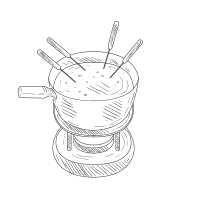
The High-Altitude Fondue Fail
You’ve gathered friends at your mountain retreat. The fire crackles, the view astounds, and the anticipation for a classic cheese fondue is palpable. You follow your trusted recipe to the letter. Yet, instead of a velvety, cohesive dip, you’re left with a pot of grainy, separated sludge or a rubbery, unappealing mass. The dream of a communal, joyous feast dissolves into culinary frustration. The culprit is not your skill or your ingredients. It is the invisible, pervasive force of altitude. Mastering its effects is the single greatest differentiator between fondue failure and flawless, consistent results. Understanding and implementing precise altitude adjustments for high-elevation fondue making is the foundational skill that transforms your high-country kitchen into a haven of culinary confidence.
The Foundation: Understanding the Physics of Thin Air
Perfect high-altitude fondue begins not with a pot, but with principle. You must first comprehend how thin air alters the fundamental rules of cooking. This knowledge turns guesswork into a predictable science.
The Boiling Point Problem
At sea level, water boils at 212°F (100°C). For every 500-foot increase in elevation, the boiling point drops by approximately 1°F. At 7,000 feet, water boils near 198°F. This dramatically changes cooking dynamics. Your fondue will never reach sea-level temperatures, slowing starch gelatinization and affecting protein behavior. Simmering is more aggressive, and the margin for error before overheating shrinks.
Moisture Evaporation & Cheese Chemistry
Reduced atmospheric pressure causes liquids to evaporate much faster. In fondue, this rapid moisture loss is catastrophic. The dairy proteins in cheese, primarily casein, tighten and squeeze out fat too quickly when overheated or dried out. Without sufficient liquid to keep them lubricated, the proteins clump together, creating a grainy, curdled texture. Simultaneously, starches like flour or cornstarch thicken differently, often failing to form a stable emulsion before the cheese seizes.
The Core Adjustments: A Tactical System for Success
Consider this your fondue control panel. Actively managing these three variables grants you command over the challenging high-altitude environment.
Temperature & Heat Management
The “low and slow” mantra is non-negotiable. You must abandon high-heat techniques. Use the lowest possible burner setting that maintains a bare simmer. I insist on using a heavy-bottomed pot for even heat distribution and a clip-on candy or deep-fry thermometer. Your target pot temperature is 160-175°F (71-79°C)—well below the boiling point. This gentle heat coaxes the cheese into melting smoothly without shocking its proteins.
Liquid Ratios & Acidity
To combat rapid evaporation and keep proteins lubricated, you must increase your liquid base. For every 1,000 feet above 3,000 feet, add one extra tablespoon of wine, beer, or broth per pound of cheese. Acidity is your ally; it helps keep cheese proteins dispersed. Ensure your recipe includes a sharp, acidic white wine or a squeeze of lemon juice. For thickening, I prefer cornstarch over flour at altitude. It thickens at a lower temperature and creates a glossier sauce. Use 1 tablespoon of cornstarch per pound of cheese, dissolved in your cold liquid or kirsch before adding.
The Stirring Protocol
Frequent, gentle, figure-eight stirring is the engine of your emulsion. It distributes heat evenly, prevents hot spots that cause breaking, and slowly incorporates the cheese into the liquid. Stir constantly when adding cheese. Once melted, stir every 30-45 seconds to maintain the bond. Aggressive whisking can incorporate too much air and destabilize the fondue.
The Ingredient Arsenal: Selection and Preparation
Superior outcomes are built from the first choice. Select and prepare every component with altitude in mind.
Cheese Selection & Prep
Choose cheeses known for good melting properties and moderate moisture content. Gruyère, Emmental, Appenzeller, and Fontina are excellent. Avoid aged, dry cheeses like an extra-old cheddar as a primary base. Grate your cheese finely on a box grater; smaller pieces melt faster and more evenly, reducing the heat exposure time. Crucially, let the grated cheese sit at room temperature for 30 minutes before using. Adding cold cheese to the pot is a common cause of temperature shock and clumping.
The Liquid Base
Always use an acidic liquid like a dry white wine (Sauvignon Blanc, Grüner Veltliner) or a light beer. The acid promotes a smooth melt. Water lacks this stabilizing acidity and results in a bland, unstable fondue. Warm your liquid base in a separate saucepan or microwave before adding it to the fondue pot. Adding cold liquid drops the temperature and can cause the cheese to seize.
The Emulsifier Table
| Component | Key Characteristics & Use at Altitude |
|---|---|
| Cornstarch | My preferred choice for high elevation. Thickens at lower temperatures, creating a shiny, smooth sauce. Must be dissolved in a cold liquid (wine, kirsch) first to prevent clumping. Use 1 tbsp per pound of cheese. |
| All-Purpose Flour | Traditional, but requires higher heat to lose its raw flavor. Can lead to a slightly grainier texture if not cooked long enough at lower boiling points. Toss with grated cheese to coat before adding. |
| Lemon Juice | A powerful acidic stabilizer. Adds brightness. Use 1-2 teaspoons per pound of cheese, added with the initial liquid. Essential if using a low-acid beer or broth. |
| Kirsch (Cherry Brandy) | More than tradition; the alcohol helps keep cheese proteins fluid. Adds complex flavor. Add 1-2 tablespoons after the cheese has melted, and always mix with your cornstarch first for a slurry. |
Advanced Techniques: Optimization for Excellence
Move beyond basic functionality into the realm of guaranteed excellence with these refined methods.
The Double-Boiler Method
For absolute control, abandon direct heat. Place your fondue pot over a saucepan of gently simmering water. This creates a gentle, indirect heat source that makes it nearly impossible to overheat the cheese. It is the single most effective technique for guaranteeing a silky texture at any elevation.
The Rescue Protocol
If your fondue begins to separate (an oily pool forms) or turns grainy, act immediately. Remove the pot from heat. In a separate bowl, whisk 1 tablespoon of warm liquid (wine, lemon juice) with 1 teaspoon of cornstarch until smooth. Vigorously whisk this slurry into the broken fondue. Return to very low heat, stirring constantly. It will re-emulsify within a minute.
Flavor Balancing at Altitude
Alcohol flavors can taste sharper at elevation. If using kirsch, start with the lower end of the recommended amount. Taste and adjust. Similarly, salt perception can change. Season with a light hand at first, then taste once the fondue is fully emulsified and adjust with fine sea salt.
Threat Management: Preventing Common Pitfalls
Adopt a proactive stance. Prevention is always simpler than the cure.
Prevention: The Best Defense
Mise en place is critical. Have all your ingredients grated, measured, and within reach before turning on the heat. Use a thermometer. Stir with purpose and consistency. Never walk away from a melting fondue pot. These simple disciplines form an impenetrable defense against most failures.
Intervention: The Recovery Plan
Learn to identify problems instantly:
Breaking/Oily: Fat is separating from the sauce. Caused by overheating.
Graininess: Cheese has curdled into small bits. Caused by high heat, cold ingredients, or insufficient acid/liquid.
Rubberiness: Fondue forms a thick, elastic mass. Caused by severe overheating and rapid moisture loss.
For all three, the first step is the same: immediately remove from heat and execute the Rescue Protocol outlined above.
The High-Altitude Fondue Action Plan
| Scenario | Primary Adjustments | Focus Goal |
|---|---|---|
| Quick Weeknight Fondue | Use pre-grated cheese blend (room temp). Increase liquid by 2 tbsp. Employ the double-boiler method for foolproof results. Use cornstarch slurry. | Speed and Simplicity with zero risk of failure. |
| Crowd-Pleasing Party Fondue | Choose robust cheeses like Gruyère and Fontina. Increase liquid base by 15%. Use a mix of cornstarch and 1 tbsp flour for extra stability. Keep on a dedicated fondue burner at its lowest setting. | Robust flavor and a texture that holds for hours of social dipping. |
| Classic Swiss-Style at 7,000+ ft | Traditional 50/50 Gruyère/Emmental. Use dry white wine, warmed. Increase wine by 3 tbsp per pound. Use kirsch-cornstarch slurry. Stir with wooden spoon in a figure-eight. Maintain pot temp at 165°F via thermometer. | Authentic texture and tradition, perfected for the alpine environment. |
The Summit of Flavor
Perfect fondue at altitude is a triumphant synthesis of applied knowledge over environmental challenge. It is the reward for understanding the physics of thin air, for wielding heat and starch with precision, and for respecting the delicate chemistry of cheese. You have moved from fearing failure to commanding the system. The final vision is deeply satisfying: a pot of flawless, creamy fondue, its surface glistening, surrounded by friends in a high-mountain cabin. This mastery of altitude adjustments for high-elevation fondue making transforms a simple shared meal into a memorable, triumphant experience—the true summit of communal flavor.
Related Articles
- How to Make Fondue at Home: A Beginner’s Guide to All 4 Types
- Fondue Potluck Guidelines: Coordinating Multiple Pots and Flavors
- Kids’ Fondue Birthday Party Planning Guide
- Fondue Speed Dating Events: How to Host Interactive Singles Nights