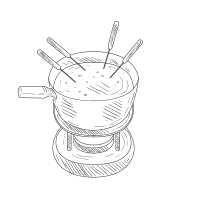
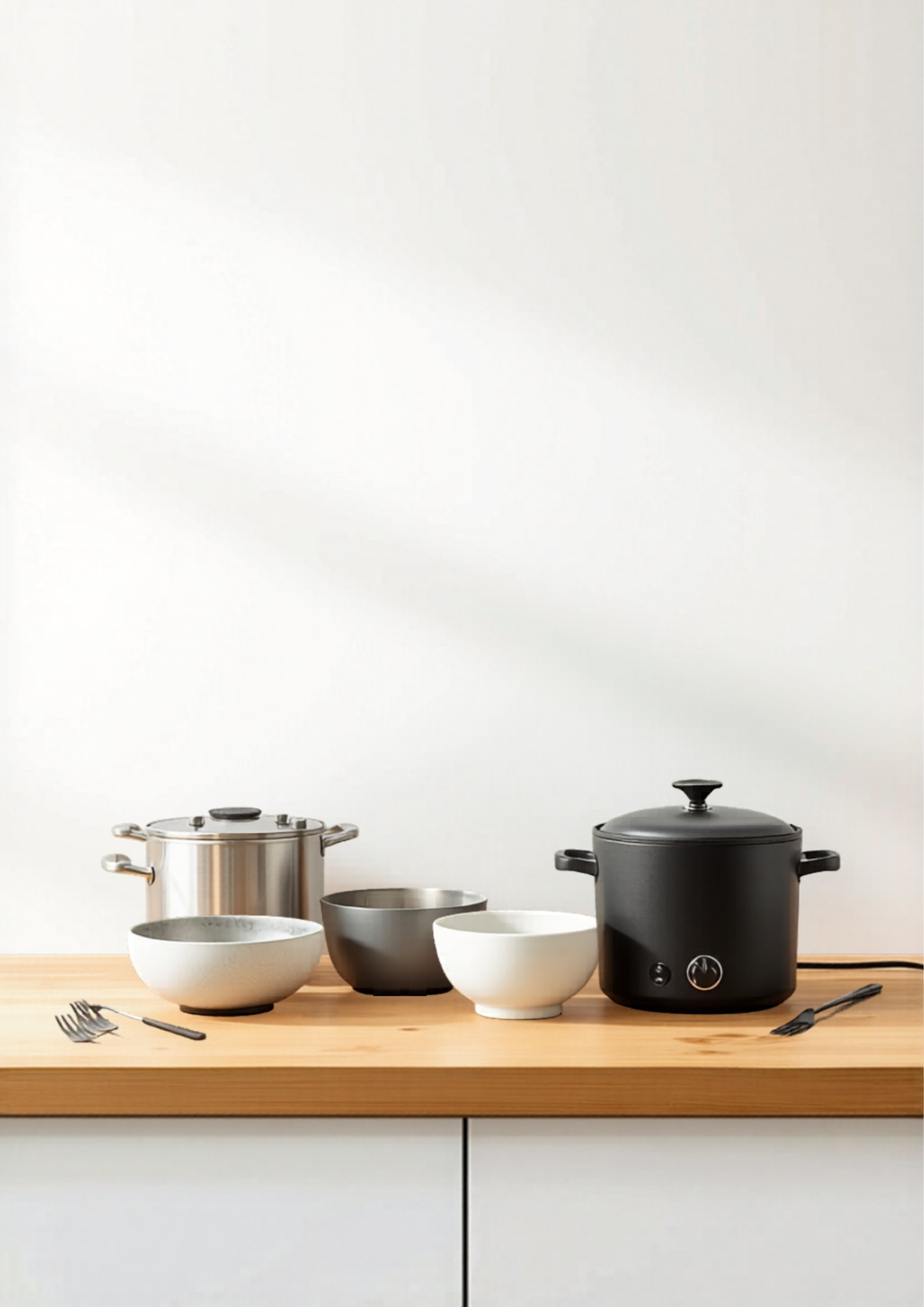
The fondue pot market is genuinely confusing. There are electric pots, ceramic caquelons, cast iron sets, stainless steel bourguignonne pots, and everything in between — and making the wrong choice means either burnt chocolate or lukewarm cheese. The right pot depends entirely on what you’re cooking.
This guide covers every type, every use case, how to size a pot for your group, and what features actually matter versus what’s marketing. We’ll also cover care and maintenance so your pot lasts for decades.
Types of Fondue Pots
1. Ceramic Caquelon
The traditional Swiss fondue pot. Ceramic distributes heat gently and evenly — it can’t get as hot as metal, which is exactly what cheese fondue needs. The slightly rough interior surface creates friction that helps maintain the cheese emulsion as you stir. Ceramic retains heat well, so your fondue stays liquid at the table even with a low-flame burner.
Best for: Cheese fondue (primary), chocolate fondue (secondary)
Not ideal for: Oil and broth fondue — ceramic can crack if exposed to very high oil temperatures (375°F+)
Typical capacity: 1–3 quarts
Price range: $30–$120
2. Cast Iron
Cast iron is the most versatile fondue pot material. It gets hot enough for oil fondue, distributes heat evenly enough for cheese, and retains temperature beautifully for both. It’s heavier than ceramic and takes longer to heat up — but once it’s at temperature, it holds it. The Enamel-coated versions are easier to clean and don’t require seasoning.
Best for: All three types (cheese, chocolate, oil/broth)
Drawback: Heavy (especially when full). More expensive.
Typical capacity: 1.5–4 quarts
Price range: $60–$200
3. Stainless Steel
The standard choice for bourguignonne (oil/broth) fondue. Stainless steel conducts heat efficiently and can handle the high temperatures required for deep-frying (350–375°F / 175–190°C). Most stainless sets come with a splatter guard. The problem with stainless for cheese or chocolate is that it heats unevenly and creates hot spots — you’ll get burnt spots on the bottom while other areas are too cool.
Best for: Oil fondue (meat fondue), hot pot/broth fondue
Not ideal for: Cheese or chocolate
Typical capacity: 2–4 quarts
Price range: $40–$150
4. Electric Fondue Pots
Electric pots are the most forgiving for beginners because they offer precise temperature control. You set a dial and the pot maintains that temperature automatically — no flame management required. Most electric sets include a thermostat dial ranging from “warm” to “high” (typically 110°F to 375°F / 43°C to 190°C). The downside: they require an outlet, which limits placement flexibility.
Best for: Beginners, cheese fondue, chocolate fondue, oil fondue (if rated for it)
Not ideal for: Outdoor use, candlelit dinners where cords are inconvenient
Typical capacity: 1.5–3 quarts
Price range: $35–$100
Quick Comparison
| Material | Cheese | Chocolate | Oil/Broth | Best Feature |
|---|---|---|---|---|
| Ceramic | ★★★★★ | ★★★★☆ | ★☆☆☆☆ | Even, gentle heat |
| Cast Iron | ★★★★☆ | ★★★☆☆ | ★★★★☆ | Versatility |
| Stainless Steel | ★★☆☆☆ | ★★☆☆☆ | ★★★★★ | High-heat capability |
| Electric | ★★★★☆ | ★★★★★ | ★★★☆☆ | Temperature control |
Choose by Use Case
For Cheese Fondue
You need gentle, even heat that stays around 140–150°F (60–65°C) at the table. Ceramic is the traditional and best choice. Cast iron enameled works well too. Electric is a great beginner option.
Recommended: Ceramic caquelon + alcohol or gel burner at low setting, OR electric pot set to 300–325°F.
→ See: Best Cheese Fondue Pots
For Chocolate Fondue
Chocolate is the most temperature-sensitive. It scorches easily above 120°F. An electric pot on the lowest “warm” setting (110–120°F) is ideal. A tealight-powered ceramic pot is also excellent. Avoid stainless steel.
Recommended: Electric pot on “warm” setting (110–120°F), OR ceramic pot with a single tealight candle.
→ See: Best Chocolate Fondue Pots
For Oil / Meat Fondue (Bourguignonne)
You need to maintain cooking oil at 350–375°F (175–190°C) — hot enough to cook raw meat quickly. Only stainless steel or cast iron can handle these temperatures safely over an open flame. Look for a pot that comes with a splatter guard and has a narrow opening to reduce oil splashing.
Recommended: Stainless steel with splatter guard + high-output alcohol or Sterno burner.
→ Safety note: Never use a pot rated for cheese or chocolate for oil fondue — the heat can crack ceramic or warp thin materials.
For Hot Pot / Broth Fondue
Similar to oil fondue but lower temperature. Stainless steel works best. Some electric pots have high enough heat settings for broth fondue — check the maximum temperature rating.
→ Use our Fondue Pot Selector Tool to get a personalized recommendation in under a minute.
Size Guide: How Big a Pot Do You Need?
| Group Size | Cheese Fondue | Chocolate Fondue | Recommended Capacity |
|---|---|---|---|
| 2 people | 400g cheese | 170g chocolate | 1–1.5 quart |
| 4 people | 800g cheese | 340g chocolate | 2 quart |
| 6 people | 1,200g cheese | 510g chocolate | 2.5–3 quart |
| 8+ people | 1,600g+ cheese | 680g+ chocolate | 3–4 quart (or two pots) |
Pro tip: For groups of 8+, two smaller pots is often better than one large one. It allows people to gather on both sides of the table, and you can make two different flavors — one cheese, one chocolate, for example.
Fuel Types Compared
Sterno / Gel Fuel
The most common in North America. Sterno cans burn cleanly and are easy to find at grocery stores and party supply shops. Controllable to some extent with the pot lid (covering reduces flame, opening increases it). A single can lasts approximately 2–2.5 hours. Good for cheese fondue; too hot for chocolate.
Alcohol Burner (Spirit Lamp)
The traditional Swiss choice. Filled with denatured alcohol (or fondue fuel / methylated spirits). Adjustable flame via a rotating wick cover. Burns very cleanly with no smell. Produces a slightly lower heat than Sterno at maximum — better suited for cheese.
Electric
The most controllable. Thermostat dial lets you dial in the exact temperature. No fuel to buy or manage. Best for beginners or anyone who finds flame management stressful during dinner parties. Requires an outlet nearby.
Tealight Candles
Produces very low, gentle heat — suitable only for keeping already-melted chocolate warm. Not powerful enough to melt cheese or heat oil. Useful for chocolate fondue pots specifically designed for them.
→ In-depth comparison: Fondue Fuel Alternatives
Features That Actually Matter
Must-Have Features
- Color-coded fondue forks: Essential for group dining. Every pot set should include enough forks (typically 6) with different colored handles. If a set only includes 4 forks, buy extras separately.
- A stable stand: The stand should hold the pot securely and not wobble. Tip-overs with hot fondue are dangerous. Test the stability before buying.
- Adequate handle length: Pot handles should stay cool enough to touch when the fondue is at temperature. Check reviews for this — some cheaper pots have handles that get too hot to hold.
Nice-to-Have Features
- Splatter guard: Essential for oil fondue sets; optional for cheese/chocolate.
- Dishwasher-safe components: Check whether the pot itself and the fork handles are dishwasher safe. Ceramic usually is; some electric components are not.
- Adjustable height burner: Some stands allow you to raise or lower the pot relative to the flame — useful for fine-tuning temperature without adjusting the fuel.
Marketing Features to Ignore
- “Professional grade” — meaningless marketing term
- Included recipe cards — nice but not a reason to choose one pot over another
- Non-stick coating on fondue pots — non-stick and fondue don’t mix well; the stirring motion wears out coatings quickly
Our Top Picks by Category
Best Overall: Swissmar Lugano
A 2-quart cast iron pot with an enameled interior, a cast iron stand, and 6 color-coded forks. Works for cheese, chocolate, and light oil fondue. The enamel interior is easy to clean and doesn’t require seasoning. A classic for a reason — Swissmar has been making fondue equipment in Switzerland since 1986.
Best for Beginners: Cuisinart CFO-3SS Electric
A 3-quart stainless steel electric pot with a temperature dial from 200°F to 375°F. The dial makes it genuinely foolproof for cheese fondue — set it to 325°F and walk away. Includes a splatter guard and 8 color-coded forks. Not the most attractive pot on the market, but extremely reliable.
→ See: Cuisinart CFO-3SS Review
Best for Chocolate Only: GREECHO Mini Electric
A small-capacity electric pot designed specifically for chocolate and dipping sauces. Heats gently to 110–130°F. The small footprint makes it practical for dessert tables and small gatherings. Not suitable for cheese or oil.
Best for Large Groups: Artestia Cast Iron (4-Quart)
A larger enamel cast iron option that can handle enough cheese for 6–8 people. Heavy but very durable. The enamel coating means no seasoning required. Includes a safety stand and 6 forks.
Best Budget Pick: Under $40
If budget is the primary concern, look for a basic ceramic caquelon with a stand and 4 forks from brands like Bonjour or Artestia. These may not have the premium feel of Swiss-made sets but function perfectly well for occasional home use.
Care & Maintenance
Cleaning After Use
- Ceramic: Soak in warm soapy water for 10–15 minutes to loosen dried cheese. Never use abrasive scrubbers on the interior — they damage the surface. A plastic scraper works well for stubborn residue.
- Cast Iron (enameled): Same as ceramic — warm soapy water, no abrasives. Avoid thermal shock (don’t put a hot cast iron pot in cold water).
- Stainless Steel: Dishwasher safe in most cases. Bar Keeper’s Friend removes discoloration and staining from high-heat oil use.
- Electric: Never submerge the base/element. Wipe with a damp cloth. The removable pot insert is typically dishwasher safe — check your manual.
The Religieuse (Cheese Crust)
After cheese fondue, a golden crust typically forms on the bottom of the pot. This is called la religieuse and is considered a delicacy in Switzerland — scrape it out and eat it. If the crust is actually burnt (black), soak the pot in warm water for 20–30 minutes before attempting to clean it.
Long-Term Storage
- Store the caquelon with the fondue forks inside and the lid on, in a cool dry place
- For cast iron (uncoated), apply a thin coat of cooking oil to the interior before storing to prevent rust
- Keep fondue fuel (Sterno cans, alcohol) in a cool location away from heat sources
- Electric cord: wrap loosely and store without kinks
→ Full maintenance guide: How to Clean and Maintain Your Fondue Pot
Frequently Asked Questions
Can I use one pot for both cheese and chocolate?
Yes — ceramic and electric pots handle both well. Clean the pot thoroughly between uses, especially if switching from cheese to chocolate. Any residual cheese flavor will affect the chocolate. Cast iron also works for both but is overkill for chocolate. Stainless steel is too hot for chocolate fondue.
What’s the difference between a caquelon and a fondue pot?
“Fondue pot” is the generic term. A caquelon specifically refers to the traditional Swiss earthenware vessel used for cheese fondue — wider than it is tall, with a handle. Not all fondue pots are caquelons.
How many forks do I need?
One fork per person, plus one spare. For a dinner party of 6, a set with 8 forks is ideal — someone always drops one or needs a replacement. Make sure the forks have different colored handles; identical forks at a fondue party leads to confusion and cross-contamination.
Do I need a splatter guard?
Only for oil fondue. When raw meat hits hot oil, it spatters. A splatter guard (a circular ring that fits over the pot opening) is a safety essential for bourguignonne fondue. Cheese and chocolate fondue don’t need one.
Is it safe to leave a fondue pot burning unattended?
Never leave an open-flame fondue pot unattended. Keep the stand on a heatproof surface (not a tablecloth), away from curtains, and out of reach of children. Electric pots are safer in this regard — they have automatic shutoffs on most models.
Can I use a regular pot on a candle warmer instead of a fondue set?
For chocolate fondue, yes — a small heatproof pot on a candle warmer or tealight stand works perfectly well. For cheese, a candle warmer doesn’t produce enough heat to keep the fondue at temperature. You’d need at minimum a gel fuel or alcohol burner.
Not Sure Which Pot to Buy?
Answer 3 quick questions — what you’re cooking, how many people, and your budget — and our tool recommends the right pot for you.