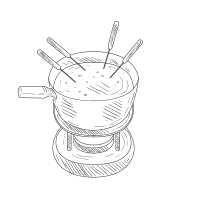

The Core Mechanics: The Science Behind the Melt
Fondue pots are designed for one primary purpose: to maintain a consistent, gentle heat that keeps delicate ingredients like cheese and chocolate perfectly melted without burning. They aren’t for boiling; they’re for sustaining an ideal temperature for dipping.
Consistent, Gentle Heat is Key
The magic of a fondue pot lies in its ability to provide low, steady warmth. This prevents cheese from breaking (separating into a greasy mess) and chocolate from seizing (becoming grainy and solid).
The Heat Source Breakdown
Every fondue pot has two main parts: the pot itself and the heat source. The heat source, whether a flame or an electric coil, warms the pot, which then distributes that heat evenly to the contents inside.
The Material Matters
The pot’s construction material—ceramic, metal, or enameled cast iron—plays a crucial role in how it absorbs, retains, and disperses heat, directly impacting your fondue’s texture and consistency.
Types of Fondue Pots and How They Work
Different fondue experiences require different types of pots, each engineered for specific tasks.
Classic Ceramic (Caquelon) for Cheese
This traditional pot is designed for cheese fondue. Its thick ceramic walls heat up slowly and retain heat exceptionally well, providing the gentle, consistent warmth needed to keep cheese smooth. It’s typically used with a liquid fuel burner placed directly underneath.
Metal Pots for Oil and Broth
Constructed from stainless steel or enameled cast iron, these pots are built to withstand high temperatures. They work with a more intense heat source to bring oil or broth to a boil for cooking raw meats and vegetables, a style known as Fondue Bourguignonne.
Electric Fondue Pots: The Modern Multi-Tasker
Electric models feature a built-in, thermostatically controlled heating element. This allows for precise temperature settings, making them the most versatile and foolproof option for cheese, chocolate, oil, or broth.
Choosing the Right Pot: A Quick Comparison
| Type | Best For | Heat Source | Pros | Cons |
|---|---|---|---|---|
| Ceramic Pot | Cheese Fondue | Liquid Fuel | Authentic experience, even heat distribution. | Not suitable for high-heat cooking, fragile. |
| Metal Pot | Oil & Broth | Liquid Fuel/Propane | Handles very high temperatures well. | Temperature can be tricky to control precisely. |
| Electric Pot | Everything | Electric Plug | Precise temperature control, safest for indoor use. | Less traditional, power cord can be inconvenient. |
Common Challenges and How to Solve Them
Even with the right equipment, things can go wrong. Here’s how to troubleshoot common fondue frustrations.
“My Cheese is Lumpy or Oily!”
This is called “breaking,” and it’s often caused by overheating. The solution is to keep the heat very low and stir in a cornstarch slurry at the beginning. Adding an acidic component like a splash of lemon juice or wine can also help stabilize the emulsion.
“My Chocolate Seized Up!”
Chocolate seizes when it comes into contact with even a tiny amount of moisture. Always ensure your pot and utensils are completely dry. To fix it, try stirring in a small amount of warm cream or fat to bring it back to a smooth consistency.
“The Bottom is Burning!”
This usually means the heat is too high or too direct. Immediately reduce the flame or lower the electric setting. For ceramic pots, using a heat diffuser between the flame and the pot can help distribute heat more evenly and prevent scorching.
Fondue Pot FAQs
Get quick answers to the most frequently asked questions about fondue pots.
Can you use a regular pot instead of a fondue pot?
You can use a regular pot on the stove to melt your ingredients, but it’s not safe or practical for serving at the table. Fondue pots are designed to maintain a safe, consistent temperature in a social dining setting, which a regular pot cannot do.
What fuel is safest for my fondue pot?
Safety depends on following the manufacturer’s instructions. Denatured alcohol and gel fuel are common for traditional pots, while electric pots are generally considered the safest for indoor use. Always place any fondue setup on a stable, heat-proof surface away from flammable materials.
How do you clean a fondue pot?
Always let the pot cool completely first. For cheese or chocolate, soaking the pot in warm, soapy water is the most effective way to loosen residue. For oil fondues, wipe out excess oil with a paper towel before washing. Avoid abrasive scrubbers on ceramic and non-stick surfaces.
A Unique Fondue Tip You Might Not Know
The “Garlic Rub” for Enhanced Flavor: Before you add any ingredients to your cold ceramic or metal fondue pot, take a peeled clove of garlic and rub it vigorously all over the interior surface. This classic technique imparts a subtle, aromatic garlic essence that forms a delicious flavor foundation for your cheese fondue, a pro secret often missed in modern guides.
Related Articles
- Fondue Potluck Guidelines: Coordinating Multiple Pots and Flavors
- How to Make Fondue Without a Fondue Pot
- How to Make Chocolate Fondue Without a Fondue Pot
- How to Heat a Fondue Pot