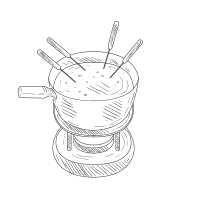

Introduction to Cheese Fondue
There’s something uniquely joyful about gathering around a bubbling pot of cheese fondue. It’s more than a meal; it’s a social event, a culinary ritual that invites conversation and connection. The dipping, the swirling, the shared anticipation—it’s an experience. But at the heart of this delightful tradition lies one critical question: Fondue: Which Cheese to Use? The answer is the difference between a silky, cohesive dip and a clumpy, oily disappointment. Choosing the right cheese isn’t just a suggestion; it’s the foundation of a perfect fondue.
The Golden Rules of Fondue Cheese Selection
Not all cheeses are created equal when it comes to the fondue pot. The perfect fondue cheese must possess two key qualities: impeccable melting ability and a flavor that can stand up to wine and garlic.
The Must-Have Qualities: Melting Ability & Flavor
Why does Gruyère melt into velvety bliss while an aged cheddar might release a pool of grease? It comes down to chemistry. Cheeses that melt well, like Gruyère, Fontina, and Gouda, have a balanced structure of moisture, fat, and calcium. As they heat, the protein network relaxes and allows the fat and water to flow freely, creating a smooth emulsion. Hard, aged cheeses (like Parmesan) have less moisture and a tighter protein structure, causing them to become oily or clumpy. Fresh cheeses (like mozzarella or ricotta) have too much moisture and can become watery and rubbery.
The Starch is Your Secret Weapon
Many home cooks think tossing a bit of cornstarch or flour into their fondue is just for thickening. This is a misconception. The starch’s primary role is to act as an emulsifier. When you toss your shredded cheese in starch before adding it to the pot, the starch molecules coat the fat and protein particles. This creates a protective barrier that prevents the fats from separating from the liquids when heated, ensuring your fondue remains a smooth, homogenous mixture instead of breaking into a greasy mess. This simple, often overlooked step is the secret to a professionally smooth fondue.
The Classic Fondue Cheeses: A Deep Dive
These Swiss classics form the holy trinity of traditional fondue, each bringing its own essential character to the pot.
Gruyère: The Nutty, Salty Backbone
Gruyère is the undisputed king of fondue cheeses. This firm, pale yellow cheese from Switzerland boasts a complex, nutty, and slightly salty flavor. When melted, it provides a robust, savory base that isn’t overly sharp, making it the perfect foundation upon which to build your fondue. Its excellent melting properties ensure a smooth, creamy texture.
Emmentaler: The Iconic “Holey” Melter
Famous for its distinctive holes (or “eyes”), Emmentaler is the other classic partner to Gruyère. It has a milder, buttery, and faintly fruity flavor compared to its counterpart. Emmentaler melts into a wonderfully fluid and stretchy consistency, which helps to lighten the texture of the fondue and contributes to that classic, stringy pull when you dip your bread.
Vacherin Fribourgeois: The Swiss Secret (If You Can Find It)
For a truly authentic and luxurious fondue, seek out Vacherin Fribourgeois. This semi-soft, washed-rind cheese is a well-guarded secret in Swiss fondue circles. It’s intensely creamy, aromatic, and has a pronounced, earthy flavor. When melted, it contributes an unparalleled richness and complexity that elevates the fondue to another level. It’s a key component in the prized “Moitié-Moitié” (half and half) blend.
Modern Twists & Flavorful Alternatives
While the classics are unbeatable, don’t be afraid to explore other excellent melting cheeses from around the world.
Comté or Beaufort: Excellent French Stand-Ins
These French Alpine cheeses are close cousins to Gruyère and make fantastic substitutes. Comté offers a similar nutty complexity, while Beaufort is exceptionally buttery and creamy. Both melt beautifully and are often more readily available outside of Switzerland than some of the more obscure Swiss varieties.
Appenzeller: For a Bold, Herby Kick
If you love a pungent, full-flavored cheese, Appenzeller is for you. This Swiss cheese is washed in a secret herbal brine, giving it a spicy, aromatic kick. Use it in small amounts blended with Gruyère to add a bold, herby dimension to your fondue without overwhelming the palate.
The “No” List: Cheeses to Avoid in Fondue
Some cheeses are simply not suited for the fondue pot. Here’s why you should avoid them:
- Hard, Aged Cheeses (e.g., Parmesan, Aged Cheddar): Their low moisture and tight protein structure cause them to “break,” releasing oils and becoming grainy.
- Fresh Cheeses (e.g., Mozzarella, Ricotta, Paneer): Their high moisture content makes them watery and can lead to a rubbery, elastic texture when melted.
- Blue Cheeses (e.g., Gorgonzola, Roquefort): Their strong, moldy flavor can dominate the fondue and their texture doesn’t always emulsify well. (A small amount blended with other cheeses can work for a specific flavor profile, but it’s risky for a classic fondue).
Popular Fondue Cheese Blends Compared
The art of fondue often lies in the blend. Here’s a comparison of classic and modern combinations.
| Blend Name | Cheeses Used | Flavor Profile | Best For |
|---|---|---|---|
| The Classic Neuchâteloise | Gruyère & Emmentaler | Perfectly balanced, nutty, creamy, and mild. | Purists and first-time fondue makers. A crowd-pleasing standard. |
| The Moitié-Moitié (“Half & Half”) | Gruyère & Vacherin Fribourgeois | Incredibly rich, creamy, and complex with an earthy aroma. | An authentic, luxurious Swiss experience. The gold standard for many connoisseurs. |
| A Robust Alpine Blend | Gruyère, Appenzeller, & Comté | Sharp, deeply savory, aromatic, and bold. | Adventurous eaters who love strong, complex cheese flavors. |
Troubleshooting Your Fondue
Even with the best cheese, things can sometimes go wrong. Here’s how to fix common fondue failures.
“My Fondue is Rubbery or Stringy!”
Cause: The cheese was likely overheated or added to the pot too quickly, causing the proteins to tighten and seize.
Fix: Maintain a very low, gentle heat (just a bare simmer) throughout the process. Add your shredded cheese in small handfuls, whisking constantly until each addition is fully melted and incorporated before adding the next.
“My Fondue is Oily and Separated!”
Cause: The emulsion has broken. This happens when the fondue gets too hot, or if there wasn’t enough starch or acid to bind the fats and liquids.
Fix: Immediately remove the pot from the heat. Add a tablespoon of cold lemon juice or white wine and whisk vigorously. The acid and rapid cooling can often help re-emulsify the mixture.
“My Fondue is Too Thick or Lumpy!”
Cause: An imbalance in your cheese-to-liquid ratio, or the cheese wasn’t properly coated in starch.
Fix: Thin it out gradually by whisking in a small amount of warm wine, broth, or even a splash of kirsch. If lumps persist, an immersion blender can save the day, but use it sparingly to avoid a gummy texture.
Frequently Asked Questions (FAQs)
Can I use pre-shredded cheese for fondue?
Answer: It is strongly discouraged. Pre-shredded cheese is coated with anti-caking agents like potato starch or cellulose. These coatings prevent the cheese from clumping in the bag but also prevent it from melting smoothly into a uniform sauce. For the creamiest fondue, always buy a block of cheese and shred it yourself just before using.
What can I use instead of white wine?
Answer: Absolutely! The wine provides acidity which helps stabilize the emulsion, but there are great non-alcoholic substitutes. Try a dry hard cider, a light lager beer, or a mixture of chicken or vegetable broth with a generous squeeze of fresh lemon juice to mimic the necessary acidity.
Is it okay to reheat leftover fondue?
Answer: Yes, but it requires a gentle touch. Reheat it slowly in a heavy-bottomed saucepan over the lowest possible heat, stirring constantly. You will almost certainly need to add a tablespoon or two of liquid (wine, milk, or broth) to help it reconstitute to a saucy consistency. Avoid the microwave, as the intense, uneven heat will almost guarantee a separated, greasy mess.
Can I make a fondue with just one type of cheese?
Answer: Absolutely. While blends are traditional for their complexity, a single-cheese fondue can be magnificent. A 100% Gruyère fondue is a classic preparation, offering a pure, uncomplicated, and deeply satisfying nutty flavor. It’s a perfect way to showcase a high-quality cheese you love.
Related Articles
- The Best Cheese Fondue Pot for Home Use: Cast Iron, Ceramic, or Electric?
- Fondue Tasting Party: Side-by-Side Cheese Comparison Format
- Fondue Smoking Techniques: Adding Wood-Smoked Flavor to Cheese
- Creating Layered Fondue: Multiple Cheese Flavors in One Pot