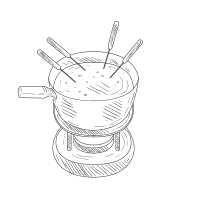

How To Choose The Right Fondue Pot: The Ultimate Guide
Fondue is a fun, social dining experience, but the wrong pot can lead to a disappointing mess. This guide will walk you through every consideration to ensure your next fondue night is a success.
Understanding Your Fondue Style: The First Step
Cheese Fondue
Requires gentle, consistent, low heat. A pot that’s too hot will cause the cheese to separate and become oily.
Chocolate Fondue
Needs very low, delicate heat to avoid scorching the chocolate. A flame that’s too strong is the enemy.
Oil or Broth Fondue (Fondue Bourguignonne)
Requires high heat to maintain a rolling boil or hot enough oil for cooking raw meat.
Key Factors in How To Choose The Right Fondue Pot
Material Matters: The Heart of the Heat
Ceramic or Stoneware: Best for cheese and chocolate. Provides even, gentle heat distribution. (Pain Point: Can be fragile and may crack with sudden temperature changes).
Cast Iron: Excellent heat retention, great for all fondue types. Heats very evenly. (Pain Point: Very heavy and requires seasoning to prevent rust).
Stainless Steel: Durable, lightweight, and often non-reactive. Ideal for oil and broth fondues. (Pain Point: Can create hot spots if the base is thin).
Copper: Heats quickly and very evenly, a classic choice. (Pain Point: Often requires a tin or stainless steel lining and can be expensive to maintain).
The Heat Source: Fueling the Fun
Gel Fuel / Liquid Fuel (Sterno): Portable, easy to use, and offers good flame control. Best for cheese and chocolate.
Denatured Alcohol Burner: Provides a clean, hot flame, excellent for all fondue types.
Electric: The ultimate in temperature control. You can set an exact temperature, making it foolproof for beginners. (Pain Point: You’re tethered to an outlet, limiting portability).
Induction-Compatible: If you have an induction cooktop, this is a modern and highly efficient option.
Capacity and Shape
Consider how many people you typically host. A 1-quart pot is good for 2-4 people; 2-3 quarts is better for a party. A curved or rounded pot (caquelon) is traditional for cheese, making it easier to stir.
Head-to-Head: Fondue Pot Material Comparison
| Material | Best For | Pros | Cons |
|---|---|---|---|
| Ceramic | Cheese, Chocolate | Gentle heat, traditional look | Fragile, slow to heat |
| Cast Iron | All Types | Superior heat retention, durable | Very heavy, requires maintenance |
| Stainless Steel | Oil, Broth | Lightweight, durable, easy clean | Can have hot spots |
| Electric | All Types (esp. beginners) | Precise temperature control | Not portable, cord can be clumsy |
Avoiding Common Fondue Fails
Scorched Chocolate or Separated Cheese
This is almost always a heat issue. Solution: Use a pot with a heavy base (cast iron, thick ceramic) and a gentle fuel source.
The Pot That Won’t Stay Hot
A common problem with thin metal pots during oil fondue. Solution: Prioritize heat retention (cast iron) or use a powerful fuel source.
A Dangerous, Tippy Setup
A tall, narrow pot on a small stand is a hazard. Solution: Look for a stable, wide base on both the pot and the stand.
The Impossible Clean-Up
Burnt-on cheese is a nightmare. Solution: Soak the pot immediately after use. Non-stick interiors can be a major help.
The Pro’s Secret: What You Might Not Know
The “Swiss Rule” for Cheese Fondue
In Switzerland, it’s believed that a well-used, unwashed ceramic pot (simply wiped clean) seasons over time, much like a cast-iron skillet, and improves the flavor of subsequent fondues. While not for everyone, this highlights the importance of a dedicated pot for cheese to avoid flavor transfer.
Frequently Asked Questions (FAQs)
Can I use a regular pot on the stove instead of a fondue pot?
While you can melt ingredients in any stove-safe pot, a dedicated fondue set is designed for safe, stable tabletop use with a consistent heat source, which is crucial for the experience.
What is the most versatile type of fondue pot?
A high-quality cast iron or a well-reviewed electric pot is your best bet for handling cheese, chocolate, and oil with minimal fuss.
How do I control the temperature of a fuel-based fondue pot?
Most burners have a sliding lid to regulate airflow and flame size. For a lower flame, partially close the lid.
Is a non-stick coating a good idea for a fondue pot?
For cheese and chocolate, a non-stick interior can be a lifesaver for clean-up. Just ensure you use wooden or silicone forks to avoid scratching the coating.
Conclusion: Recap that knowing How To Choose The Right Fondue Pot comes down to matching the pot’s material and heat source to your preferred fondue style. By considering these factors, you can invest in a centerpiece that will deliver perfect, memorable meals for years to come.
Related Articles
- Fondue Potluck Guidelines: Coordinating Multiple Pots and Flavors
- How to Make Fondue Without a Fondue Pot
- How to Make Chocolate Fondue Without a Fondue Pot
- How to Heat a Fondue Pot