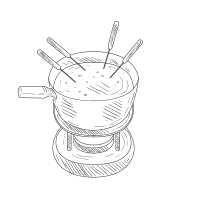
The Golden Rules of the Perfect Fondue Dip
The Essential Dipping Technique: A Two-Step Process
Don’t just stab and dunk. The perfect bite requires finesse. First, gently swirl your dipped item in a figure-eight motion as you lift it out. This coats it evenly and prevents messy, uneven drips. Second, hold your fork over the pot for a few seconds to let the excess cheese drip off. This is the secret to a neat, non-drippy bite that won’t soil your clothes or plate.
Choosing Your Champion: The Best Dippers for Cheese Fondue
The right dipper is half the battle. A day-old, crusty bread like a baguette is king because the firm crust holds up to dipping, and the porous interior soaks up the cheese beautifully. Don’t be afraid to explore beyond bread with blanched broccoli, steamed baby potatoes, crisp apple slices, and cured meats like salami. Using the right textures solves the common pain point of soggy, falling-apart dippers disintegrating in the pot.
| Excellent Dippers | Good Dippers (Use Caution) | Avoid These |
|---|---|---|
| Crusty Baguette | Mushrooms | Soft, Fresh Bread |
| Blanched Broccoli & Cauliflower | Pear Slices | Leafy Greens |
| Baby Potatoes | Grapes | Very Wet Fruits |
| Cured Meats (Salami, Ham) | Pretzels | Crumbly Crackers |
Avoiding Common Fondue Fails (Pain Points Solved)
The Dreaded “Lost Bread” and How to Prevent It
Few things disrupt a fondue party like a piece of bread sinking to the bottom of the pot. The cardinal rule is: if you drop your bread, you owe a penalty (traditionally, buying the next round of drinks!). To prevent this, always skewer your bread through the crust, not the soft center, for a much more secure hold.
Taming the Stringy Mess
A common frustration is your bite pulling up the entire pot’s worth of cheese in one long, unmanageable string. The solution is the “twirl and lift” technique. As you lift your dipper, twirl your fork to wrap the cheese neatly around the food. Also, ensuring your cheese mixture has the right consistency from the start—not too thick—is key to preventing this.
Keeping Your Fondue Smooth, Not Clumpy
A grainy or broken fondue ruins the dipping experience. This pain point is best solved at the source. When making your fondue, toss your shredded cheese in a little cornstarch or flour before adding it to the warm wine or base liquid. Add the cheese gradually, stirring constantly in a figure-eight motion until fully melted and smooth.
Dipping Do’s and Don’ts: A Quick Comparison
| DO | DON’T |
|---|---|
| Use long-handled fondue forks. | Use your regular eating fork (it gets dangerously hot). |
| Stir the pot occasionally in a figure-eight. | Let the fondue sit stagnant, which causes it to burn on the bottom. |
| Double-dip from your own plate. | Double-dip directly from your eating fork into the communal pot. |
| Drink wine, tea, or kirsch with fondue. | Drink cold water—folklore says it can cause digestive issues. |
Pro Secrets for an Unforgettable Fondue Experience
The “Fondue Foot” and Other Unique Traditions
Here’s a unique piece of fondue lore many don’t know: In some Swiss and French traditions, there’s a playful custom called “le fondue foot” or “Fondue-Chnöpfl.” The story goes that if a man loses his bread in the pot, he must buy a bottle of wine for the table. If a woman does the same, she must kiss her neighbors. This adds a layer of fun, interactive folklore to the meal that transforms it from a simple dinner into a memorable event.
Flavor Pairing Beyond the Pot
Elevate your fondue by thoughtfully pairing dippers with specific cheese types. The sharp, nutty notes of a classic Gruyère fondue are magnificently complemented by sweet, crisp pear slices. A sharper cheddar or beer-based fondue pairs wonderfully with tangy pickles or gherkins. For a classic Swiss Moitié-Moitié, try it with a piece of air-dried beef like Bündnerfleisch.
Your Cheese Fondue Dipping Questions, Answered (FAQs)
What is the best type of bread for cheese fondue?
A crusty, day-old bread like a French baguette or sourdough is ideal. The sturdy structure prevents it from becoming a soggy mess and falling off the fork, ensuring you get a perfect, cheese-laden bite every time.
Can I drink water with fondue?
It is traditionally advised against. The longstanding belief, rooted in Alpine folklore, is that cold water causes the cheese to solidify or “clog” in your stomach, leading to discomfort. Wine, hot tea, or a small glass of kirsch (cherry brandy) are the preferred beverages as they are thought to aid digestion.
What should I do if my fondue becomes too thick?
If your fondue thickens and becomes difficult to dip, don’t panic. A small splash of warm white wine, broth, or a squeeze of lemon juice can help loosen it. Stir gently over low heat until it returns to a smooth, flowing consistency.
Is there a proper way to eat the crispy cheese at the bottom of the pot?
Yes, and it’s a treat! The browned, crispy cheese layer at the bottom is called “la religieuse” (the nun). At the end of the meal, the host will often carefully lift it out in one piece. It’s considered a delicacy and should be shared among the guests as the grand finale.
Related Articles
- How to Make Swiss Fondue
- How to Make Oil Fondue
- How to Make Cheese Fondue Without Wine
- How to Keep Cheese Fondue Warm