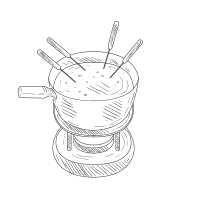

Fondue is a Swiss dish in which small pieces of food are dipped into a communal pot of hot liquid kept warm at the table. It started in the Alps as a practical way to use aged cheese and hardened bread through long winters, and became an international sensation after debuting at the 1964 World’s Fair in New York. Today it’s one of the easiest, most impressive meals you can host at home — and once you understand the four types, you can build an entire evening around it.
What Are the 4 Types of Fondue?
Every fondue is built around a hot communal pot — but what goes in the pot changes everything.
- Cheese fondue — melted cheese and white wine, served with bread cubes and vegetables. The Swiss classic, and the best starting point for beginners.
- Chocolate fondue — melted chocolate and cream, served with fruits, marshmallows, and sweets. The easiest fondue to make and the biggest crowd-pleaser.
- Oil fondue (Fondue Bourguignonne) — hot oil used to cook raw meat at the table. Origin: Burgundy, France. Interactive, fun, and satisfying for meat lovers.
- Broth fondue — seasoned simmering broth used to cook meat and vegetables. A lighter alternative to oil fondue.
What Do You Need to Make Fondue at Home?
- A fondue pot — ceramic or cast iron for cheese and chocolate; deep stainless steel for oil or broth
- A heat source — tealight candles, a gel burner, or an electric fondue base
- Long fondue forks — color-coded tips prevent mix-ups at a busy table
- Your fondue base — cheese, chocolate ganache, oil, or broth
- Dippers — bread and vegetables for cheese; fruit and sweets for chocolate; raw meat for oil or broth
That’s it. No special training required.
How to Make Cheese Fondue at Home (Step-by-Step)
Cheese fondue is the ideal first fondue. It takes about 20 minutes and needs just four ingredients: Gruyère, Emmental, dry white wine, and cornstarch.
- Rub the inside of your fondue pot with a halved garlic clove, then discard it.
- Pour in dry white wine and warm over medium-low heat until just simmering.
- Toss shredded Gruyère and Emmental with one teaspoon of cornstarch.
- Add cheese in small handfuls, stirring in figure-8 motions, waiting for each addition to melt before adding more.
- Stir in a splash of kirsch (cherry brandy) and a pinch of fresh nutmeg.
- Transfer the pot to your fondue stand and light the burner — or plug in your electric pot.
- Keep the flame on the lowest setting that maintains a slow, gentle bubble. Never let it boil.
The most common beginner mistake is rushing step 4. Add cheese slowly and it will come together perfectly every time.
Best Dippers for Every Type of Fondue
| Fondue Type | Best Dippers |
|---|---|
| Cheese | Crusty bread cubes, apple slices, broccoli, cornichons, salami |
| Chocolate | Strawberries, bananas, marshmallows, pound cake, pretzel rods |
| Oil | Bite-size beef, chicken, and shrimp — served with dipping sauces |
| Broth | Thin beef slices, mushrooms, tofu, bok choy, glass noodles |
Tips for Your First Fondue Night
- Pick one type for your first time — cheese is the most forgiving and universally loved.
- Prep everything before guests arrive. Have dippers sliced and plated. The fondue comes together at the last minute.
- Keep warm white wine nearby during cheese fondue — if it thickens, whisk in a tablespoon to loosen it.
- Plan portions: about 6 oz of cheese per person, or 4 oz of chocolate per person for dessert fondue.
- Never double-dip — it drops the temperature and is a fondue party foul.
Frequently Asked Questions
Is fondue hard to make at home?
Not at all. Cheese fondue takes 20 minutes and four ingredients. Chocolate fondue is even simpler — just warm cream and good chocolate. Every type is achievable with basic equipment.
Can you make fondue without alcohol?
Yes. Replace white wine with non-alcoholic white wine, apple juice, or chicken broth. Add a teaspoon of lemon juice for the acidity that keeps cheese smooth. Skip the kirsch entirely — it’s optional.
What is the difference between fondue and raclette?
Both are classic Swiss cheese dishes but served differently. Fondue is a communal dipping pot. Raclette uses a table grill to melt cheese, which is scraped over boiled potatoes, cornichons, and charcuterie.
Where did fondue originate?
Fondue comes from the Swiss Alps, where mountain communities used it to make the most of aged cheese and stale bread in winter. The word comes from the French fondre — to melt. It became a North American dinner-party staple after the 1964 New York World’s Fair.
Ready to go deeper? See our guides to the Best Cheese Fondue Pot for Home Use and the Best Chocolate Fondue Pot for Home Use for full equipment recommendations.
Related Articles
- Fondue Potluck Guidelines: Coordinating Multiple Pots and Flavors
- Kids’ Fondue Birthday Party Planning Guide
- Fondue Speed Dating Events: How to Host Interactive Singles Nights
- Using Fondue Leftovers: Savory Breakfast Ideas and Baked Dishes