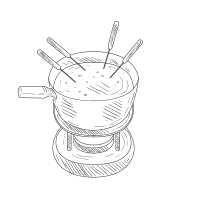

Fondue at Home: Everything You Need to Know to Make It, Serve It, and Nail It
Fondue is one of those rare dishes that turns dinner into an event. A shared pot of melted cheese, chocolate, or sizzling broth sits at the center of the table, and suddenly everyone slows down, leans in, and starts talking. The dipping is almost beside the point.
The word comes from the French verb fondre, meaning “to melt.” The earliest known written recipe dates to a 1699 Zurich cookbook, but it was not until the 1930s that fondue became widely known across Switzerland. The Swiss Cheese Union (a dairy cartel formed to manage a growing surplus of unsold cheese) launched an aggressive campaign to brand fondue as the Swiss national dish. They sent recipes to households, created advertising materials, and built a romantic narrative around Alpine peasant tradition. That story was largely a marketing invention, but it worked. By the time fondue reached America at the 1964 New York World’s Fair, it was already a symbol of Swiss identity.
Today, fondue remains one of the most enjoyable ways to host a meal. Whether you are making a classic cheese pot, a chocolate dessert dip, or a hot oil or broth version for cooking meat at the table, the principles are simple once you understand a few key techniques.
Choosing the Right Equipment
Fondue Pots: Ceramic vs. Cast Iron
The pot you use matters more than most people expect.
Ceramic pots retain gentle, even heat, which makes them ideal for cheese and chocolate fondues. Both of these can scorch quickly over direct flame, so the slow, steady warmth of ceramic gives you more control and a longer window before things go wrong.
Cast iron holds heat at a higher level and recovers it faster when cold items are added. This makes it the better choice for oil and broth fondues, where you need the cooking medium to stay hot enough to cook raw meat through quickly and safely.
No Fondue Pot? Here Is What to Do Instead
A slow cooker on its lowest “warm” or “low” setting works well as a substitute for cheese fondue. The indirect, gentle heat mimics the effect of a good ceramic pot and keeps the fondue at a consistent dipping temperature throughout the meal without the risk of scorching.
For getting the fondue started, any heavy-bottomed saucepan on the stove works fine. Prepare it there, then transfer to your serving vessel.
The Rest of the Setup
Long-stemmed fondue forks with color-coded tips help guests track their own food. For heat, the main options are:
- Gel or ethanol fuel burners, which are portable and allow you to adjust the flame
- Denatured alcohol burners, a clean-burning traditional choice compatible with most pots
- Electric fondue pots, which offer the most precise temperature control and eliminate the open flame entirely
You will also want a trivet to protect your table and a stable base for the pot. A non-slip surface underneath is worth the extra thirty seconds it takes to set up.
How to Make Classic Cheese Fondue
Choosing Your Cheese
The most important decision in cheese fondue is the cheese itself. The classic Swiss combination pairs Gruyère with Emmental, and for good reason. Gruyère brings a rich, nutty, creamy flavor that deepens with age, developing earthy complexity without becoming overpowering. Emmental contributes a milder, slightly sweet nuttiness and melts easily, giving the fondue a smooth, cohesive texture.
Neither of these cheeses should be extremely old. As cheese ages, its casein protein breaks down, and that protein is what holds the fondue together and keeps the fat from separating. A very aged cheese can result in a greasy, oily pot. Fresh-grated Gruyère and Emmental in the medium age range are ideal.
Other regional combinations worth trying include Gruyère with Vacherin Fribourgeois (the traditional “moitié-moitié” or half-half blend from the canton of Fribourg), or Gruyère with Appenzeller for a more aromatic, pungent result.
The Science of a Smooth Fondue
Understanding why fondue works makes it much easier to fix when it does not. A good cheese fondue is an emulsion, which is a stable mixture of cheese fat dispersed evenly through a liquid base. Two things make this possible:
Acid from the wine. Dry white wine contains tartaric acid, which breaks down the casein protein in the cheese. This allows the fat to disperse evenly rather than pooling on the surface. This is why the type of wine matters: you want something dry and high in acid, such as a Sauvignon Blanc, Pinot Gris, or Chasselas (the traditional Swiss choice). The acid is the functional ingredient here, not the alcohol.
Cornstarch. Tossing your grated cheese in cornstarch before adding it to the pot thickens and stabilizes the mixture, giving it structure and preventing the fat from separating.
Kirsch, the traditional cherry eau de vie added at the end, contributes flavor and a pleasant fruity complexity. It also adds a modest stabilizing effect, but it is not the primary reason the fondue holds together. The wine and cornstarch do that work.
Step-by-Step Method
- Rub the inside of your fondue pot or a heavy saucepan with a halved garlic clove. If you enjoy garlic, leave the halves in the pot as the wine heats.
- Add a dry white wine and heat over medium until it is steaming but not boiling.
- In a bowl, toss your grated cheese with one tablespoon of cornstarch per 400g (14oz) of cheese. This step is not optional.
- Add the cheese to the warm wine in small handfuls, stirring constantly in a figure-eight or zig-zag motion. Never dump it all in at once.
- Once smooth, stir in two tablespoons of kirsch, a pinch of freshly grated nutmeg, and black pepper to taste.
- Transfer immediately to your heated fondue pot and serve.
Serving quantity guide: Plan on roughly 200g (7oz) of cheese mixture and 200g (7oz) of dippers per person.
How to Make Chocolate Fondue
Choose the Right Chocolate
Skip the baking chips if you can. Standard chocolate chips contain soy lecithin and other stabilizers designed to help them hold their shape in the oven, which is exactly what you do not want when melting them into a smooth, flowing dip. They can result in a thicker, denser texture. Use good-quality chocolate bars (chopped into small, even pieces) or purpose-made melting wafers instead. Semi-sweet or dark chocolate in the 55 to 70 percent cacao range gives the best balance of richness and sweetness.
If chips are all you have, brands with higher cocoa butter content, such as Guittard or Ghirardelli, melt more reliably than budget alternatives.
Method
- Warm heavy cream in your fondue pot or a saucepan over low heat until it just begins to steam. Do not let it simmer.
- Remove from heat and add your chopped chocolate. Let it sit undisturbed for two minutes, then stir slowly from the center outward until fully combined and glossy.
- Stir in a pinch of salt and, if desired, a tablespoon of Grand Marnier, Baileys, or another liqueur for extra depth.
- If the fondue is too thick, whisk in warm cream one tablespoon at a time.
For a richer texture and a beautiful sheen, stir in a small pat of butter at the end. The added fat coats the cocoa particles and gives the finished fondue a more indulgent mouthfeel.
Serving quantity guide: Plan on 100g (3.5oz) of chocolate and 150g (5oz) of dippers per person.
How to Make Oil or Broth Fondue (Fondue Bourguignonne)
Fondue Bourguignonne takes its name from the Burgundy region of France and involves cooking raw pieces of meat directly at the table in hot oil or flavored broth. The Swiss restaurateur Konrad Egli introduced it to New York at his Chalet Suisse restaurant in 1956.
Oil vs. Broth
Oil fondue produces a crisp, seared exterior on the meat. Use an oil with a high smoke point. Canola (400 to 475°F), refined peanut (450°F), or grapeseed (420°F) are all reliable choices. They are neutral-tasting and stable at the temperatures needed to cook meat quickly.
Broth fondue is gentler, and the cooking liquid imparts flavor directly to the meat. Use a well-seasoned chicken, beef, or vegetable broth. The result is closer to poaching than frying, so pair it with bold dipping sauces to add contrast.
Safety First
Oil fondue is the one type that carries real safety risks if handled carelessly:
- Never fill the pot more than halfway with oil. Hot oil expands, and an overfilled pot can boil over dramatically.
- Pat all meats and seafood completely dry before dipping. Moisture and hot oil do not mix well.
- Cut meat into small, bite-sized pieces (roughly 2cm or 1 inch) so they cook through thoroughly in 1 to 2 minutes without sitting in the oil long enough to cool the pot down.
Serving quantity guide: Plan on 250g (9oz) of raw meat or seafood per person, plus an assortment of sauces.
Building Your Dipping Station
Half the pleasure of fondue is the spread around it. Here is what works best with each type:
For cheese fondue: Day-old crusty bread (baguette works well, cut into 1-inch cubes), blanched broccoli, cauliflower florets, baby potatoes, and sliced raw bell peppers. Crisp apple and pear slices are an underrated addition, as their acidity cuts through the richness of the cheese beautifully.
For chocolate fondue: Strawberries, banana chunks, pineapple spears, and orange segments. For baked goods, try cubes of pound cake, brownies, or angel food cake. Salted pretzels and marshmallows round out the spread and offer good textural contrast.
For oil or broth fondue: Cubed sirloin, chicken breast, shrimp, and scallops. Provide at least three or four dipping sauces. Béarnaise, garlic aioli, horseradish cream, teriyaki, and sweet chili sauce are all crowd-pleasers that work with most proteins.
Fondue Etiquette
Fondue has its own social customs, some of which date back generations. The most universal rule is no double-dipping. Once your food touches the pot, it stays on your fork until it goes in your mouth.
The tradition most guests find charming: if you drop your bread into the cheese pot, you owe the table a penalty. Depending on who you ask, that means buying the next bottle of wine, singing a song, or (in some Swiss households) a dash into the cold. As the pot empties and the last of the cheese cooks against the bottom, it forms a crispy, caramelized crust called la religieuse (the nun). This is considered a delicacy and is typically offered to the guest of honor.
Troubleshooting Common Problems
My cheese fondue is lumpy or stringy. This usually means the cheese was added too quickly, the heat was too high, or the cornstarch step was skipped. Prevention is easier than rescue: add cheese in small handfuls, keep the heat gentle and steady, and always coat the grated cheese in cornstarch first. If it has already gone lumpy, try whisking in a tablespoon of lemon juice (the acid can help restore the emulsion) and stirring vigorously over very low heat.
My cheese fondue has broken and looks oily. The fat has separated from the protein matrix, usually caused by overheating. Remove from heat immediately, whisk in a teaspoon of lemon juice, and stir constantly. In stubborn cases, an immersion blender can sometimes pull it back together.
My chocolate is seizing. Seizing happens when even a small amount of moisture enters the chocolate. Water binds to the sugar particles, forming a syrup that causes everything to clump rather than flow. Prevention means keeping every utensil completely dry and using a low, indirect heat to avoid steam condensation. To rescue seized chocolate, stir in warm heavy cream one tablespoon at a time, mixing continuously until it relaxes back into a smooth consistency.
My chocolate is burning on the bottom. Turn the heat down or off. Chocolate fondue does not need much heat to stay warm. The residual warmth of the pot is usually enough between dips. If the flame is necessary, keep it as low as possible.
Frequently Asked Questions
Can I make fondue without alcohol?
Yes, with good results. For cheese fondue, the acid in the wine is what actually does the functional work of keeping the emulsion smooth. Replacing it with dry apple cider (which also contains natural acid) or adding two tablespoons of lemon juice to vegetable broth gives you a similar effect. Skip the kirsch entirely, or substitute a teaspoon of vanilla extract or almond extract for a hint of complexity.
What do I do with leftover fondue?
Leftover cheese fondue solidifies into a firm, sliceable block when chilled. Cut it into portions, dredge each piece in flour, and pan-fry in a little butter until golden and crisp on both sides. The result (gooey inside, crunchy outside) is arguably better than the original. Leftover chocolate fondue can be refrigerated, then rolled into truffles once firm. Coat them in cocoa powder, crushed nuts, or a second layer of melted chocolate.
How do I clean a fondue pot?
For stuck-on cheese, fill the pot with water and a tablespoon of baking soda and bring it to a gentle simmer. The cheese will loosen in a few minutes. For burnt-on oil residue, add coarse salt and scrub with a folded paper towel. The salt acts as a mild abrasive without scratching. Always check the manufacturer’s instructions for ceramic pots, which can be sensitive to sudden temperature changes (going from very hot to cold water immediately can cause cracking).
Hosting a Fondue Night
The goal is unhurried, convivial dining. Set up the fondue pot as the centerpiece and arrange all dippers on platters within easy reach of everyone at the table. Provide plenty of napkins, have extra fuel ready before guests arrive, and resist the urge to rush anyone. The best fondue evenings last two hours longer than expected, and that is entirely the point.
| Fondue Type | Cheese or Chocolate | Dippers |
|---|---|---|
| Cheese Fondue | 200g (7oz) per person | 200g (7oz) per person |
| Chocolate Fondue | 100g (3.5oz) per person | 150g (5oz) per person |
| Oil or Broth Fondue | — | 250g (9oz) raw meat/seafood per person |
Related Articles
- How to Make Fondue at Home: A Beginner’s Guide to All 4 Types
- Fondue Potluck Guidelines: Coordinating Multiple Pots and Flavors
- Kids’ Fondue Birthday Party Planning Guide
- Fondue Speed Dating Events: How to Host Interactive Singles Nights