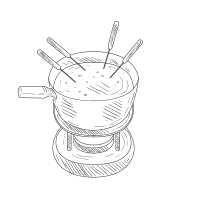
Beyond the Cheese, The Recipe for Cohesion
Picture your typical team meeting. Screums are dark, conversation is transactional, and silos feel permanent. Now, imagine a different scene: laughter around a shared pot, colleagues strategizing over the perfect dip, and genuine connections forming over a simmering blend. This is the power of a masterfully executed Corporate Team-Building Fondue Workshop. It transcends a simple meal, leveraging the universal language of shared food to rewrite team dynamics.
The act of gathering around a fondue pot is inherently collaborative and equalizing. Mastering this format, however, is what transforms a fun event into a strategic tool for building trust, communication, and unity. A successful workshop doesn’t happen by accident; it is engineered. This guide details how to move from a basic social activity to a profound team development experience, where the shared pot becomes the tangible foundation for a more effective and cohesive unit.
Foundational Choices: The “Hardware” of Your Event
Your initial logistical decisions form the critical infrastructure. Get these right, and you create a seamless container for growth. Get them wrong, and you risk logistical chaos that undermines your goals.
Part A: Format & Scale Selection
Your choice of fondue style dictates the workshop’s energy and interaction. For intimate groups of 6-12, a traditional Swiss cheese fondue fosters deep, conversation-focused bonding. For larger teams of 20+, opt for multiple chocolate or broth (bourguignonne) stations. These formats are more active and energetic, allowing for mingling and smaller group interactions. Chocolate fondue is excellent for celebratory, creative energy, while cheese or broth fondues better suit longer, more conversational meals.
Part B: Venue & Setup Logistics
Space is your stage. Ensure ample room for round tables—which promote equality and eye contact—with a central fondue pot. Allow for at least 3 feet of space between tables for safe facilitator movement and guest comfort. Ventilation is non-negotiable; avoid cramped, low-ceilinged rooms. Designate three distinct zones: a welcome/pre-brief area, the main dining activity space, and a separate or reconfigured space for the guided debrief. This physical flow mirrors the workshop’s psychological journey.
Part C: Material & Component Breakdown
Your equipment and ingredients are the tangible tools of engagement. Select them with intention.
| Component Category | Options | Key Characteristics |
|---|---|---|
| Fondue Pot (Caquelon) | Ceramic (classic), Cast Iron, Electric | Ceramic offers authentic, even heat for cheese. Cast iron retains heat superbly for oil or broth. Electric provides precise, flameless temperature control—ideal for safety in corporate settings. |
| Fuel Source | Liquid Fuel (Gel), Ethanol, Electric Hotplate | Gel or ethanol burners create ambiance but require strict safety protocols. Electric hotplates are the safest, most reliable choice for consistent, controllable heat without open flames. |
| Dipper Selection | Long-Handled Forks, Skewers, Separate Plates | Color-coded fork handles prevent mix-ups. Provide small personal plates for caught food. This simple organization prevents chaos and promotes mindful sharing. |
| Beverage Pairings | White Wine, Herbal Tea, Sparkling Water | Pair dry white wine with cheese fondue to aid digestion. Offer premium non-alcoholic options like herbal tea or sparkling water with citrus. Beverages should facilitate, not hinder, clear conversation. |
The Core System: Facilitating Interaction & Flow
A great workshop is a dynamic social system to be actively managed. Your role is to control three key variables that determine the quality of interaction.
Variable 1: Conversation & Connection
Target: Organic, cross-team dialogue that breaks down hierarchical and departmental barriers.
Consequence of Failure: Cliques re-form, silence dominates, and the activity reinforces existing silos.
Control Methods: Use a strategic seating chart to mix teams. Place printed discussion prompts at each table related to the fondue process: “What’s one ‘unique ingredient’ you bring to our team project?” or “How is stirring this pot like managing our team’s priorities?” The facilitator should launch the meal with a metaphorical icebreaker linking the first dip to taking a collaborative risk.
Variable 2: Collaborative Task Management
Target: Shared responsibility and the natural emergence of informal leaders.
Consequence of Failure: One person dominates the pot, or chaos ensues with dropped food and conflicting actions.
Control Methods: At each table, subtly assign or suggest rotating roles: the Stirrer (keeps the mix smooth), the Replenisher (adds bread or fruit), and the Coordinator (ensures everyone gets a turn). Create a simple, shared goal like “Keep our cheese perfectly emulsified” to foster immediate, low-stakes teamwork.
Variable 3: Timing & Pacing
Target: A seamless, purposeful rhythm that blends activity, dining, and reflective learning.
Consequence of Failure: A rushed eating frenzy followed by awkward dead air, with no connection to workplace lessons.
Control Methods: Communicate a clear agenda upfront: “Welcome & Metaphor (10 min), Collaborative Dining (45 min), Guided Debrief (20 min).” Use the natural waiting times—while the cheese melts or chocolate warms—for a structured prompt. The facilitator must watch the room energy and use pre-planned interventions to gently transition between phases.
Advanced Practices: Crafting the Learning Metaphor
This is where logistics become leadership development. Your goal is to embed a lasting lesson within the experience.
Preparation: Theming and Objective Alignment
Intentionally select your fondue style to mirror a business objective. Use a cheese fondue to theme a session on “Blending Diverse Strengths” into a cohesive whole. Choose a chocolate fondue for “Celebrating Sweet Success” and innovative thinking. A broth fondue (bourguignonne) can represent “Navigating a Simmering Market”—where individual contributions (dippers) cook quickly in a shared, dynamic environment. Tailor every discussion guide to the team’s specific current challenge.
Ongoing Inputs: Facilitator Guidance
The facilitator is the subtle guide, not the lecturer. Observe group dynamics silently for the first 10 minutes of dining. Then, circulate and ask pointed, open-ended questions that link the action to the workplace: “I see you’re helping each other retrieve lost items from the pot. How can we apply that ‘rescue mentality’ to our projects?” or “What happens to our cheese if we all stop stirring? What’s the workplace equivalent?”
Selection and Strategy: Beyond a One-Off Event
To maximize impact, sequence the workshop strategically. Use it as a kick-off to a new project to establish collaborative norms. Employ it at mid-year to re-energize a fatigued team. Follow up one week later with a “Fondue Pact”—a simple agreement displayed in the office referencing a lesson learned, like “We will keep stirring the pot on Project X.” This transforms a single event into an ongoing cultural touchstone.
Threat Management: Preventing a Meltdown
Adopt a proactive stance. Anticipate common pitfalls and have solutions ready before the first fork is dipped.
Prevention: Setting the Stage for Success
Communicate clearly in advance. Send a brief that includes a casual dress code (“business casual, no loose sleeves”), a dietary restrictions survey, and a one-sentence teaser of the workshop’s purpose. On-site, begin with a non-negotiable 2-minute safety briefing on burner and fork etiquette. Have a detailed run sheet and ensure all facilitators are briefed on the core metaphor and agenda.
Intervention: Handling Common Issues
Have a tiered response plan for facilitator use. For disengaged participants, use subtle redirection: ask them to explain the dipping process to a newcomer. For overly dominant participants, gently enforce the rotating roles: “Thanks for leading the stirring, Sarah. Let’s have Mark take over the next round so we can all practice.” For logistical hiccups (e.g., a pot breaks), reframe it for the group: “Interesting! Our first collaborative challenge. How should we, as a table, solve this?”
The Action Plan: A Seasonal Workshop Calendar
Integrate this powerful tool into the rhythm of your corporate year for continuous reinforcement.
| Season/Quarter | Primary Tasks | What to Focus On |
|---|---|---|
| Q1 / Kick-Off | Plan a cheese fondue workshop. Align theme with new year/quarter goals. Secure venue. | Building foundational trust and setting collaborative intentions for new projects. Focus on “blending” individual goals into team objectives. |
| Q2 / Mid-Year Boost | Organize a broth fondue event. Review H1 challenges in the debrief. | Re-energizing the team. Use the “cooking in shared broth” metaphor to discuss adapting quickly to market changes and supporting each other under pressure. |
| Q3 / Innovation Push | Host a creative chocolate fondue with unusual dippers (pretzels, bacon, fruit). | Encouraging creative risk-taking and celebrating diverse ideas. The metaphor is about combining unexpected elements for “sweet” innovative results. |
| Q4 / Review & Celebrate | Execute a festive, multi-station finale workshop combining cheese and chocolate. | Reviewing year-end successes, expressing gratitude, and solidifying team identity. Focus on shared accomplishment and the unique “flavor” of the team. |
The Lasting Flavor of Success
The true mastery of the Corporate Team-Building Fondue Workshop lies in this intentional design—transforming a shared meal into a mechanism for genuine growth. It is a journey that begins with selecting the right pot and culminates in facilitating profound, workplace-relevant insights. The ultimate reward is not a clean plate, but a transformed team dynamic. You are left not with colleagues who merely shared a meal, but with a cohesive unit that possesses a common, positive reference point. They are now a team ready to “stir the pot” on new challenges together, equipped with the tasted experience of collaboration, communication, and trust. That is the unparalleled return on investment—a team whose shared success has a rich, memorable, and lasting flavor.
Related Articles
- Fondue Tasting Party: Side-by-Side Cheese Comparison Format
- Virtual Fondue Party Ideas: Remote Entertaining During Distance
- Fondue Bar Setup for Weddings and Large Events
- Fondue Potluck Guidelines: Coordinating Multiple Pots and Flavors