
The Surprising History and Origin of Fondue
Fondue, with its warm, communal pot and delightful dipping, is a centerpiece of social dining. Yet, its story begins not in opulent banquet halls, but in the snow-covered Alpine cottages of Swiss peasants. Its history is a testament to human ingenuity, born from the stark necessities of survival and resourcefulness long before it became a symbol of convivial luxury.
The Humble Beginnings: Why Fondue Was Invented
Far from a chef’s whimsical creation, fondue was a practical solution to the harsh realities of Alpine life. It was a dish of necessity, designed to make the most of limited and aging provisions.
A Solution to a Winter Problem
The primary pain point for Swiss peasants and farmers was the long, isolating winter. During these months, fresh food was scarce. Cheese, a staple, would harden and become stale, while bread would turn rock-solid. Fondue was the ingenious answer: by slowly melting the hardened cheese with a bit of wine over a fire, they could transform inedible food into a warm, nourishing, and palatable meal. It was the ultimate form of recycling, ensuring nothing went to waste.
The “One-Pot” Advantage
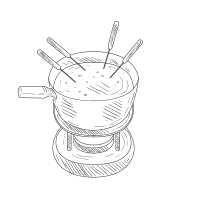
Life in the Alps required efficiency in all things, especially cooking. With limited kitchenware and a precious supply of firewood, the “one-pot” method of fondue was a major advantage. The caquelon (the classic fondue pot) sat directly over the hearth, meaning only one heat source was needed. This saved time, effort, and resources, allowing entire families to gather around a single, simmering pot for their meal.
Tracing the Timeline: Key Milestones in Fondue History
The journey of fondue from a peasant staple to a global phenomenon is marked by several key events.
Early References and the Name’s Origin
While the practice was likely older, one of the first written recipes resembling fondue appears in the 1699 Zurich manuscript, “Gartengenuss,” and later in the French book “Le Cuisinier Méthodique.” The name itself is derived from the French verb fondre, meaning “to melt,” perfectly describing the dish’s core action.
The 1930s: Fondue Becomes a National Dish
In a brilliant and deliberate move, the Swiss Cheese Union (Schweizerische Käseunion) launched a massive marketing campaign in the 1930s. With a surplus of cheese, they promoted fondue as the Swiss national dish under the slogan “La fondue crée la bonne humeur” (“Fondue creates a good mood”). This campaign was incredibly successful, uniting the country around a single culinary icon and drastically increasing domestic cheese consumption.
The 1960s-70s: Fondue’s Global Boom
Following its appearance at the 1964 New York World’s Fair, fondue exploded onto the international scene. It became the quintessential party food of the 1960s and 70s, symbolizing sophisticated, interactive, and fun entertaining. The fondue set became a common wedding gift, cementing its place in Western pop culture.
More Than Just Cheese: The Evolution of Fondue Styles
From its cheesy origins, fondue has evolved into a versatile dining concept with several popular variations.
Cheese Fondue: The Original
The classic remains king, but even it has regional twists within Switzerland. The most famous are:
| Style Name | Key Cheeses | Region |
|---|---|---|
| Moitié-Moitié (“Half-Half”) | Gruyère and Vacherin Fribourgeois | Central Switzerland |
| Neuchâteloise | Gruyère | Canton of Neuchâtel |
Fondue Bourguignonne: A Meat Lover’s Twist
This variation, where diners cook small pieces of beef in hot oil, emerged in post-WWII Switzerland. As prosperity returned, it became a celebratory way for people to enjoy expensive meat in the same communal style as the traditional cheese fondue.
Chocolate Fondue: The Modern Dessert
Here’s a unique fact many don’t know: Chocolate fondue was not invented in Switzerland. It was created in the 1960s at the New York restaurant Chalet Suisse as a way to capitalize on the fondue craze and showcase Toblerone chocolate. It was an instant hit and remains the most popular dessert fondue today.
Fondue Fun: Etiquette and Unique Traditions
Part of fondue’s charm lies in its rituals and social rules, which turn a meal into an event.
The Rules of the Pot
Proper fondue etiquette is taken seriously. Key rules include: stirring the pot in a figure-eight pattern to keep the cheese from separating, not double-dipping, and letting your dipped morsel cool for a moment before eating.
A Unique Punishment You Might Not Know
The most famous and playful tradition involves the consequence of losing your bread in the cheese pot. The classic rule is gender-specific: if a man loses his bread, he must buy a bottle of wine for the table. If a woman loses hers, she must kiss her neighbors. This added a layer of flirtatious fun and ensured everyone paid attention, making the meal a truly interactive social experience.
Frequently Asked Questions About the History and Origin of Fondue
Is fondue really from Switzerland?
Answer: Yes, the cheese fondue we know and love today originated in the Swiss Alps. While similar melted cheese dishes existed in neighboring French Savoy and Italian Piedmont (like Raclette and Bagna Cauda), the specific method of melting cheese with wine in a communal pot is distinctly Swiss.
What was the original cheese used in fondue?
Answer: There wasn’t a single “original” cheese. Peasants used whatever was locally available and aging in their larders. This typically meant a combination of hard, aged cheeses like Gruyère and softer, creamier ones like Vacherin. The modern “Moitié-Moitié” is a direct reflection of this practical approach.
How did fondue become so popular in America?
Answer: Fondue’s American popularity skyrocketed after it was featured at the 1964 New York World’s Fair in the Swiss Pavilion. This exposure, combined with its fit with the era’s trend toward casual, interactive party foods, cemented its status as a dining fad that still has a devoted following today.
Is the classic fondue pot design important?
Answer: Absolutely. The traditional earthenware caquelon is not just for show. Its thick walls and curved bottom are designed to distribute heat gently and evenly, which is crucial for preventing the cheese from scorching or separating—a key piece of the history and origin of fondue. Using a modern thin-bottomed pot often leads to a burnt, disappointing result.
Related Articles
- How to Make Fondue at Home: A Beginner’s Guide to All 4 Types
- Fondue Potluck Guidelines: Coordinating Multiple Pots and Flavors
- Kids’ Fondue Birthday Party Planning Guide
- Fondue Speed Dating Events: How to Host Interactive Singles Nights